For fifty years the World Cup produced one song for one planet. In 2026 it produced eighteen, cast by scene rather than star power, and no anthem at the center. The strongest signal this week is not a song. It is the death of the single global smash, staged in public by the one institution that used to guarantee it. The host nation's least translatable track went to number one. Specificity now out-travels universality.
- FIFA Sound's eighteen-track album is the largest music program in tournament history, cast by scene: six tracks led by Afrobeats voices, with K-pop, cumbia, corridos, reggaeton, dancehall and country each given a lane.
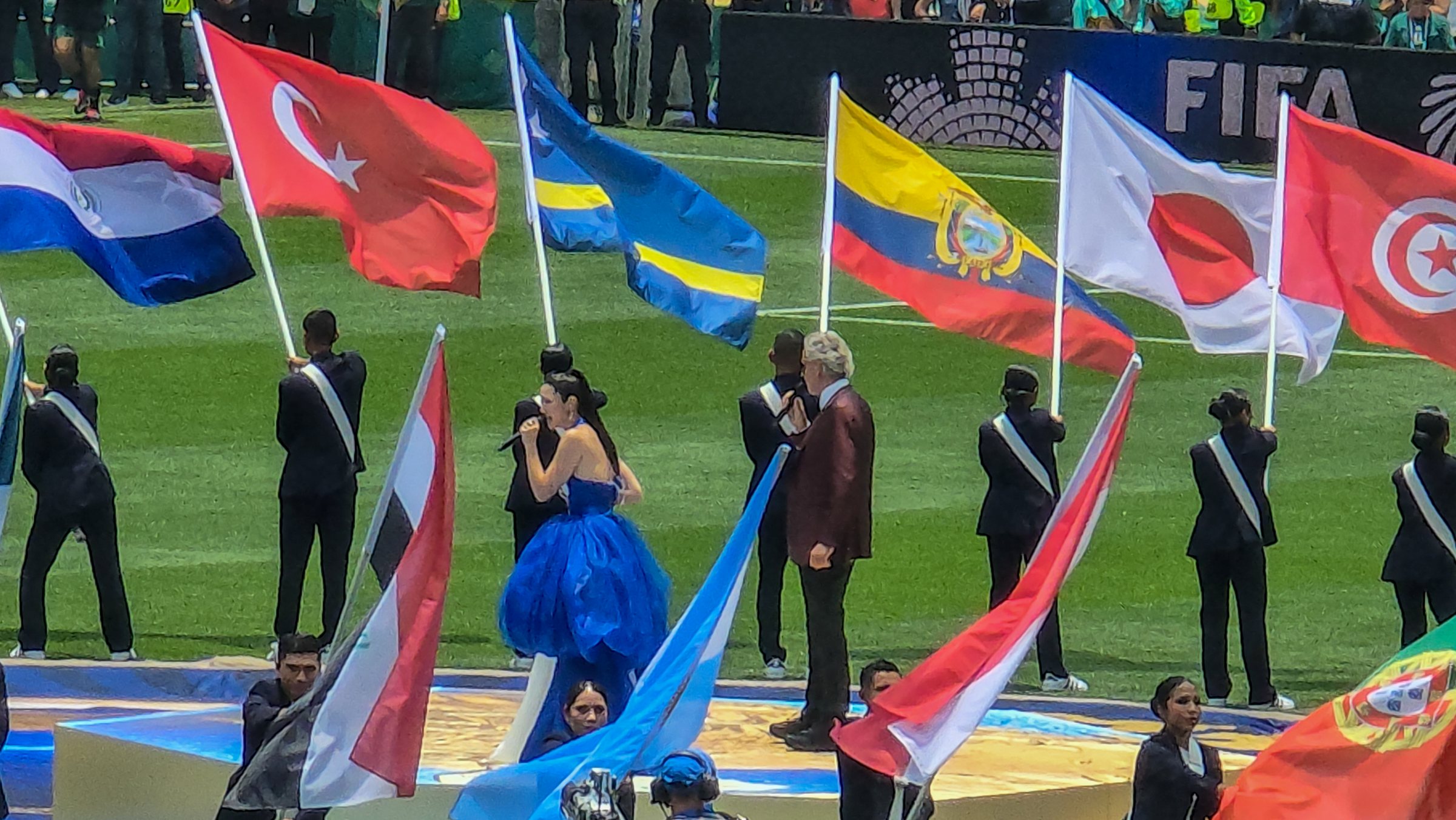
- "Por Ella" by Los Ángeles Azules and Belinda hit number one on Mexican radio and opened the ceremony at Estadio Azteca. It is a cumbia, in Spanish, that softened nothing to travel.
- Football-diaspora fans are slicing the album into national playlists, hunting for the song for us rather than the song for everyone. The behavior proves the strategy.
What the biggest sporting event on earth did with its soundtrack, why the least translatable song on it won, and the map the coalition was cast from.
The Signal: Eighteen Songs, No Anthem
For fifty years the World Cup produced one song for one planet. One superstar, one melting-pot arrangement, one chorus the whole world was supposed to agree on. "Waka Waka" was the peak of that model. On June 5 FIFA Sound released an eighteen-track double album, the longest and most expensive music program in the tournament's history, and there is no anthem at the center of it. There is a nominal official song, Shakira and Burna Boy's "Dai Dai." There is a nominal official anthem, "DNA (More Than a Game)," which required Andrea Bocelli, David Guetta, EJAE and Megan Thee Stallion to assemble. Neither is the center of gravity. The album is.
The casting is the tell. Artists were picked by scene, not by chart position. LISA for K-pop, Anitta for Brazil, Rema and Davido and Ayra Starr for Nigeria, Tyla for South Africa, Los Ángeles Azules and Belinda for Mexican cumbia, Daddy Yankee for reggaeton, Jelly Roll and Carín León for the country and regional Mexican border, Stormzy for the UK. Six of the eighteen tracks are led by Afrobeats voices. PopMatters put it plainly: Tyla, Ayra Starr and Davido are not garnishes here, they are the dish.
This is not FIFA failing to find the anthem. It is the most mass-market cultural body on earth conceding that the anthem is over, because the audience is no longer one crowd. It is a federation of scenes, each with its own gravity, and the only way to reach all of them is to stop looking for the average and start assembling the coalition.
The Song to Watch: "Por Ella"
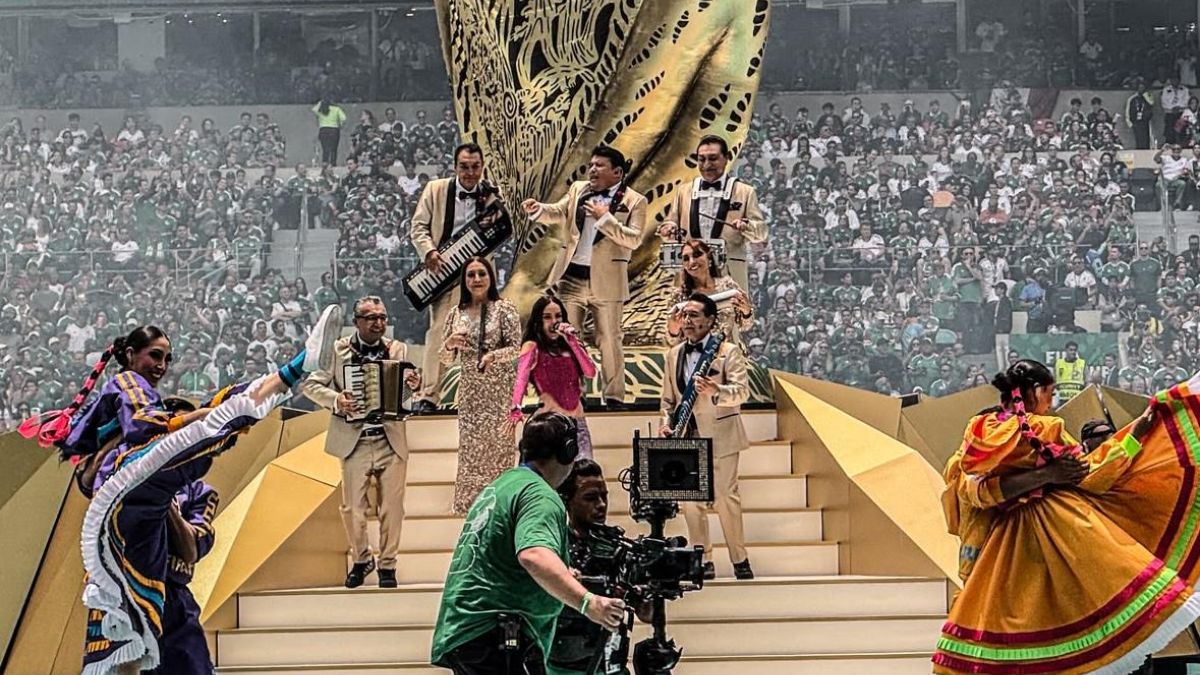
The best evidence sits at number one on Mexican radio. "Por Ella," by Los Ángeles Azules and Belinda, produced by Tainy, opened the ceremony at Estadio Azteca in Mexico City. It is a cumbia. It is in Spanish. It references pachucos and cholos. It travels under the banner "De México para el mundo," and it does not soften a single bar to get there.
Los Ángeles Azules are the most recognized cumbia group on earth, veterans of Coachella and Vive Latino. This is not a novelty crossover. It is a mature scene handed the biggest stage in the world and refusing to dilute itself for it. A generation ago the host-nation track flattened local sound into an internationally legible pop wash. In 2026 the most successful host-nation song is the least anglicized one. The song did not translate itself. It traveled anyway.
The song that refused to translate outperformed the song built to be universally palatable.
Why This Sound Matters
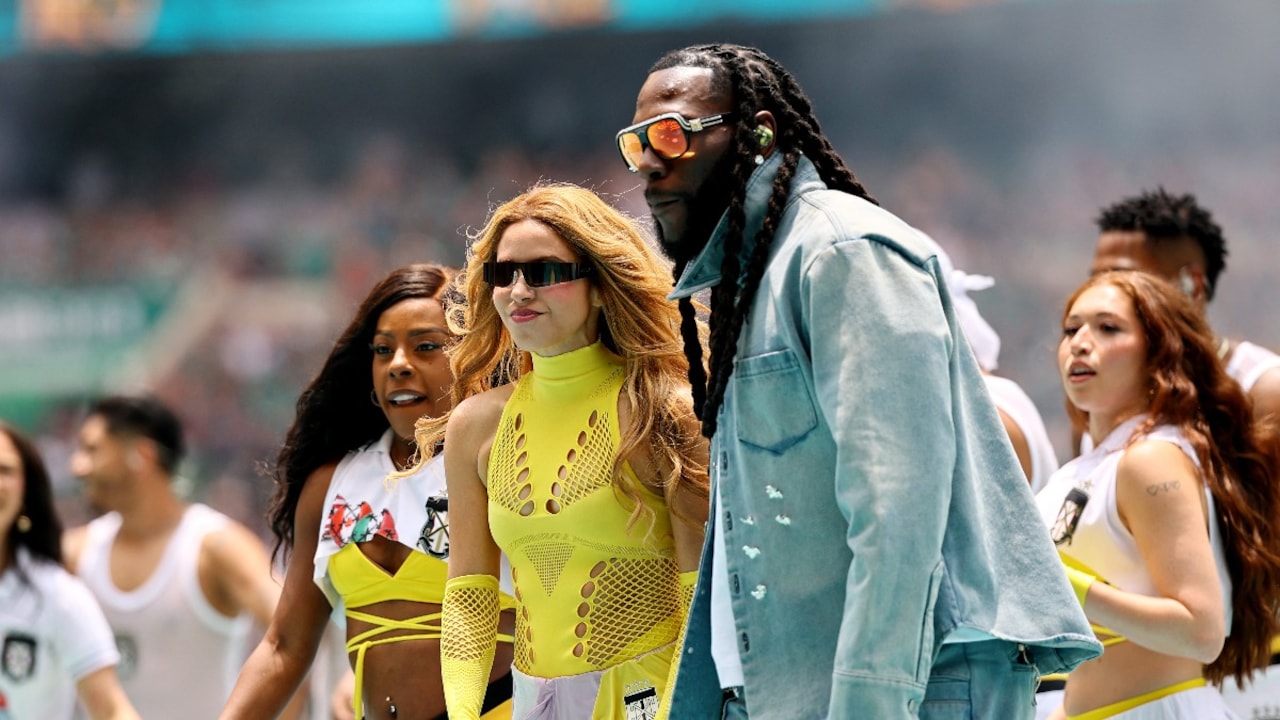
"Dai Dai" is Shakira's fourth World Cup song, which by itself tells you how few artists still carry genuinely global reach. What is new is that she is not carrying it alone. Pairing her with Burna Boy is the whole thesis compressed into one track: the old universal star can no longer cover the map, so she is cast alongside a scene leader. The official song now needs two poles to function.
Global Scene Spotlight: The Coalition Map
Here is what coalition casting looks like when you plot it. Twenty-six scene origins across the album's eighteen tracks and two bonus cuts. Drag to spin it, hover a marker to see who came from where.
Read the map, not the tracklist. There is no center. Lagos carries three lead artists across three different songs. Mexico appears three times in three distinct scenes: Mexico City cumbia, Hermosillo corridos, Guadalajara ranchera. Bangkok opens the record. The old model would have flown all of them to Los Angeles and asked them to sound like one song.
Global Radar
- Lagos and Port Harcourt, Nigeria. Six of the eighteen tracks are led by Afrobeats voices. Rema opens the record, Davido and Ayra Starr take lead billing, Burna Boy shares the official song. Placing African artists at the front of the most-watched event's official record is a status change, not a booking. Status: infrastructure, no longer a trend.
- Mexico City, Hermosillo and Guadalajara, Mexico. The host nation fielded three separate scenes rather than one "Latin" sound. Cumbia at number one, corridos alongside country, ranchera on its own track. Status: peak, host-market.
- Bangkok and Seoul. LISA leads the album's opening track. EJAE, the voice behind last year's biggest animated-music crossover, co-writes the anthem. Status: building, and quietly structural.
- Johannesburg, South Africa. Tyla shares lead billing with a US rap institution rather than appearing as texture on it. Status: peak, still moving.
- Kingston, Jamaica. Shenseea and Shaggy land on separate tracks, a generational handoff inside one record. Status: steady.
The Community Read
The behavior proves the strategy. Football-diaspora fans are not ranking the eighteen tracks by chart potential. They are sorting them by nation, splitting the album into national playlists, and syncing goal celebrations to their own scene's track rather than the official one. The comment sections are not arguing about which song is best. They are hunting for the song for us.
That is a different emotional need than the anthem was ever built to serve. The anthem offered inclusion, a seat at a table someone else had already set. The album offers recognition, which is the thing inclusion was always a substitute for. Fans are not looking for the song for everyone. They are looking for the song for them, and rewarding the record for having one.
What the Coalition Signals
Not everyone buys it. The Daily Orange argued the album lacks identity, and some fans miss the moment when a stadium sings one chorus together. They are not wrong, and the objection is the actual story. Coverage and unity are now a trade-off, and FIFA chose coverage. A record that gives twenty-six scenes their own entry point cannot also be the one song eighty thousand people already know the words to. Something real was given up here. It was given up on purpose.
Two years ago the story was that genre was dissolving into tempo and mood. This is the next stage: genre is re-solidifying around place and scene, and the scenes no longer need to pass through a Western pop filter to travel. The value of a soundtrack is no longer reach through a single track. It is coverage across a map.
The Brand Read
The World Cup just modeled the post-monoculture playbook at the highest possible stakes, and the early scoreboard is in: number one records in specific territories, scene-by-scene adoption, and fans doing the distribution for free. The move is coalition casting. Assemble a portfolio of scene-native voices, each fully centered in their own lane and language, unified by a light shared framework rather than one flattening idea. Stop chasing the song everyone tolerates. Field the songs specific communities love.
Both failure modes are live. Hire many celebrities as interchangeable reach and you get a coalition of tokens, which is worse than one honest anthem. Field so many voices that nothing is authored and you get a playlist with a logo on it. The album works because each artist is genuinely central to a real scene. The audience can tell the difference. It always could. What changed is that it now has somewhere else to go.
For fifty years the anthem was the sound of the world agreeing. It was never agreement. It was the average, and the average was the only thing that could travel far enough to matter. Now the specific travels further, and the most mass-market institution on earth just said so out loud. The World Cup did not lose its anthem. It stopped needing everyone to sing the same song to prove they were watching the same tournament.
If your next global campaign is one hero film with a dubbed voiceover, ask who it is actually for. The World Cup fielded eighteen answers instead of one, and the least translatable of them won. Which scene would recognize itself in your work, and would it be able to tell you had done the reading?
PopMatters, NME, FIFA, CNN en Español, El Informador, India Today, The Daily Orange, Wikipedia.
