World Cup 2026 brands are moving spend from the feed to the street. As digital content floods with synthetic, low-trust material, the scarce and unfakeable asset becomes shared physical presence. The defensible move is to treat the place as the primary media asset and content as the documentation of it.
- The biggest advertisers built physical places, not just media buys: Adidas "Home of Soccer" hubs, Michelob ULTRA's Pitchside Club, Motorola's Club Moto in Mexico City.
- Digital attention is abundant and easy to fake. Physical presence is scarce, time-bound, and hard to reproduce, so value is migrating toward it.
- Build the moment first and let content document it. Design for the room before the camera, and lead with access, not spectacle, while the audience is under money stress.
The FIFA World Cup 2026 is spread across thirteen host cities in three countries, and it is one of the largest sporting events ever staged. The most revealing thing about it has almost nothing to do with the football. It is where the money went.
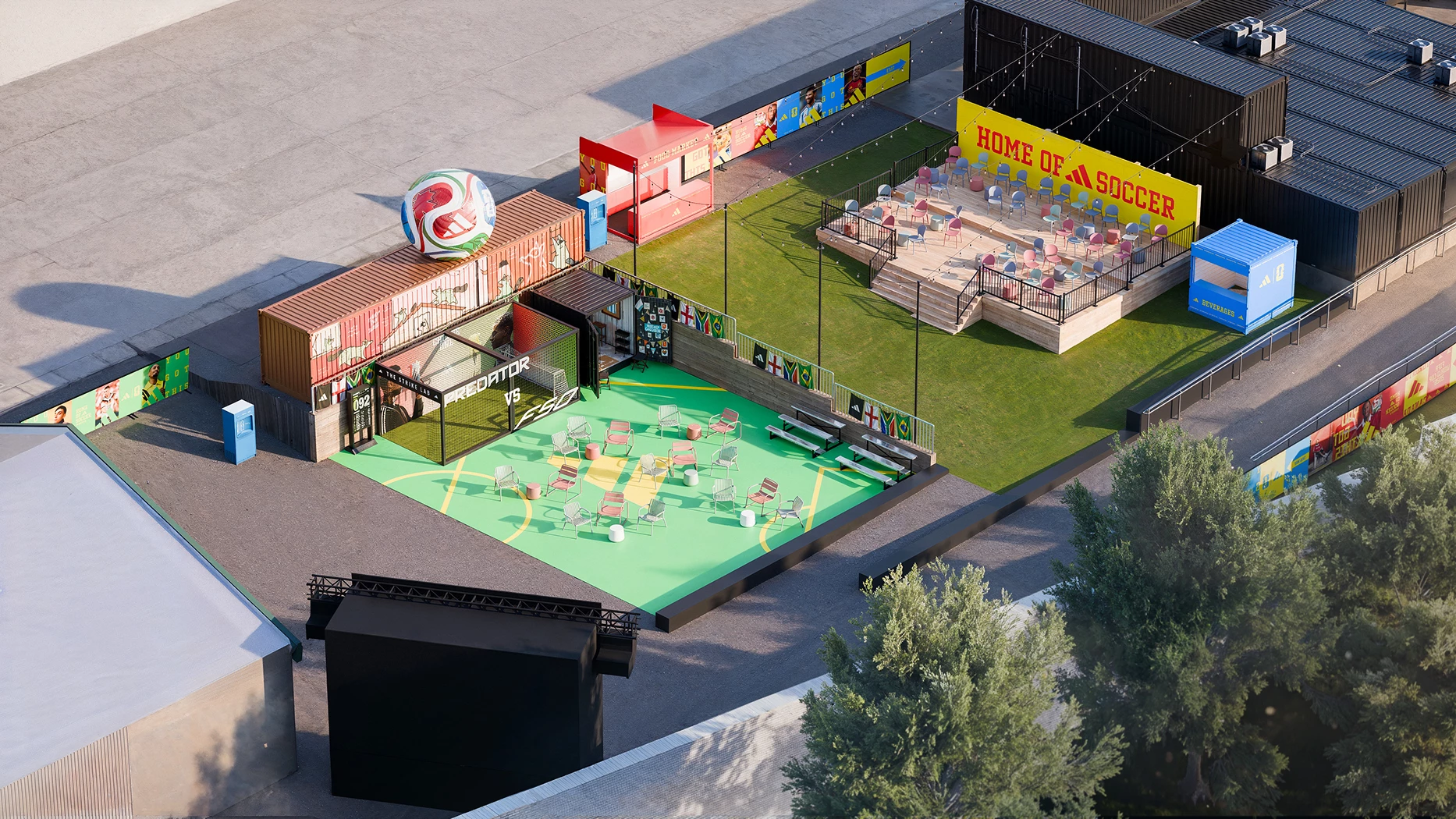
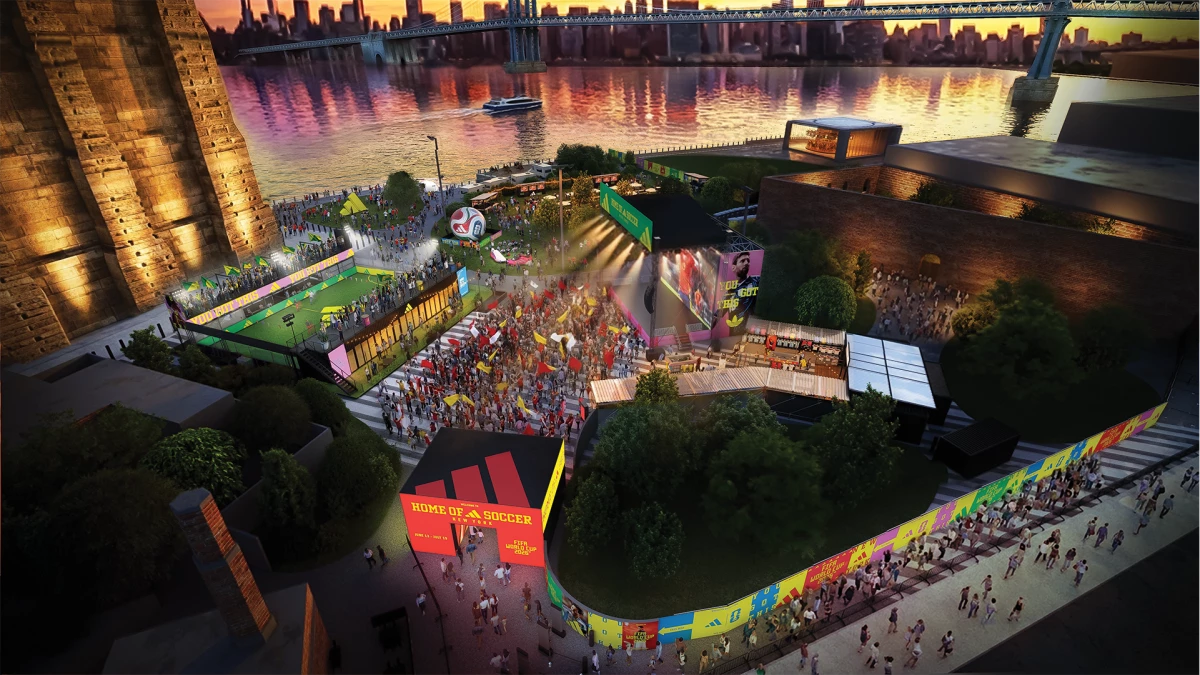
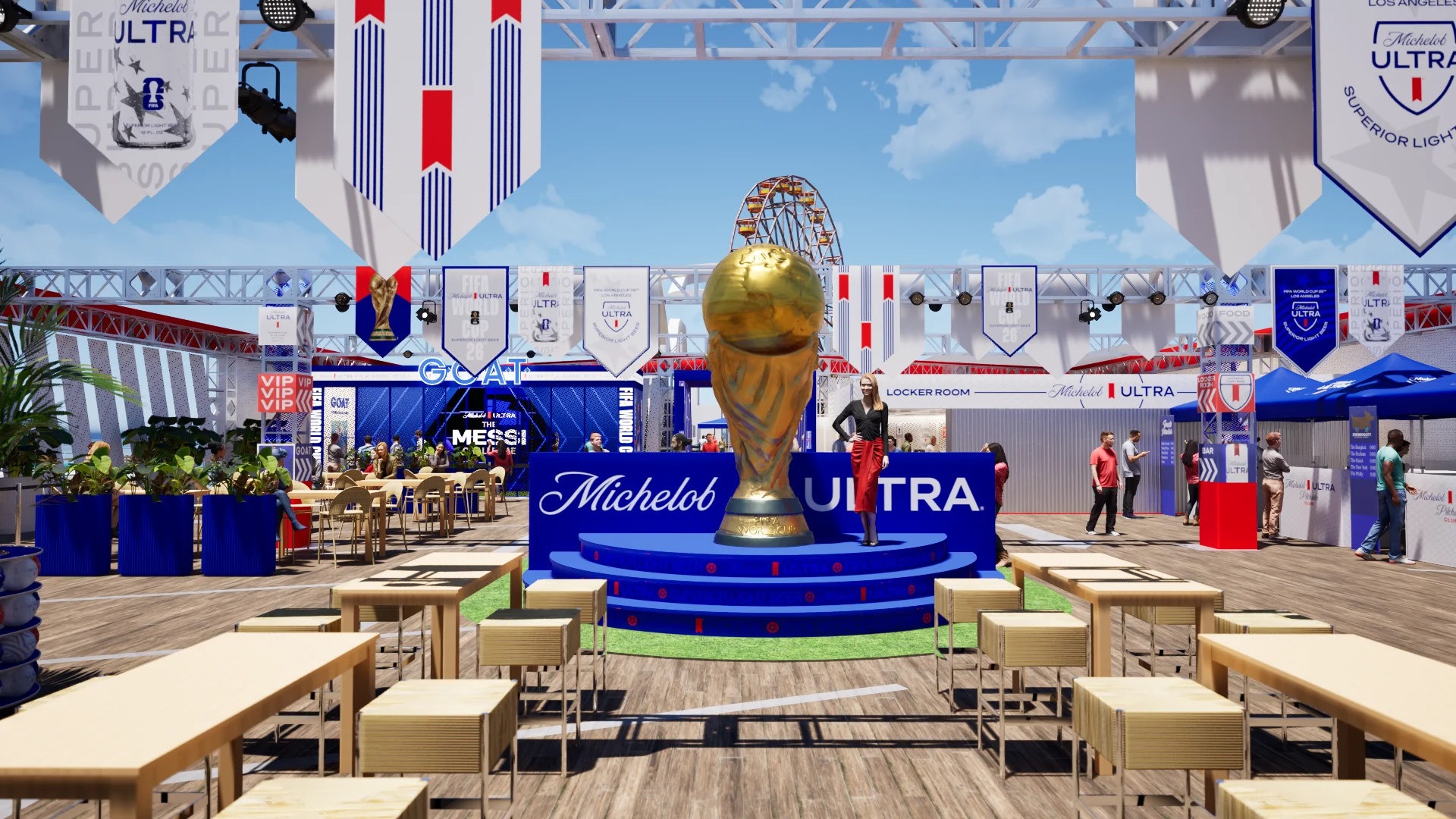
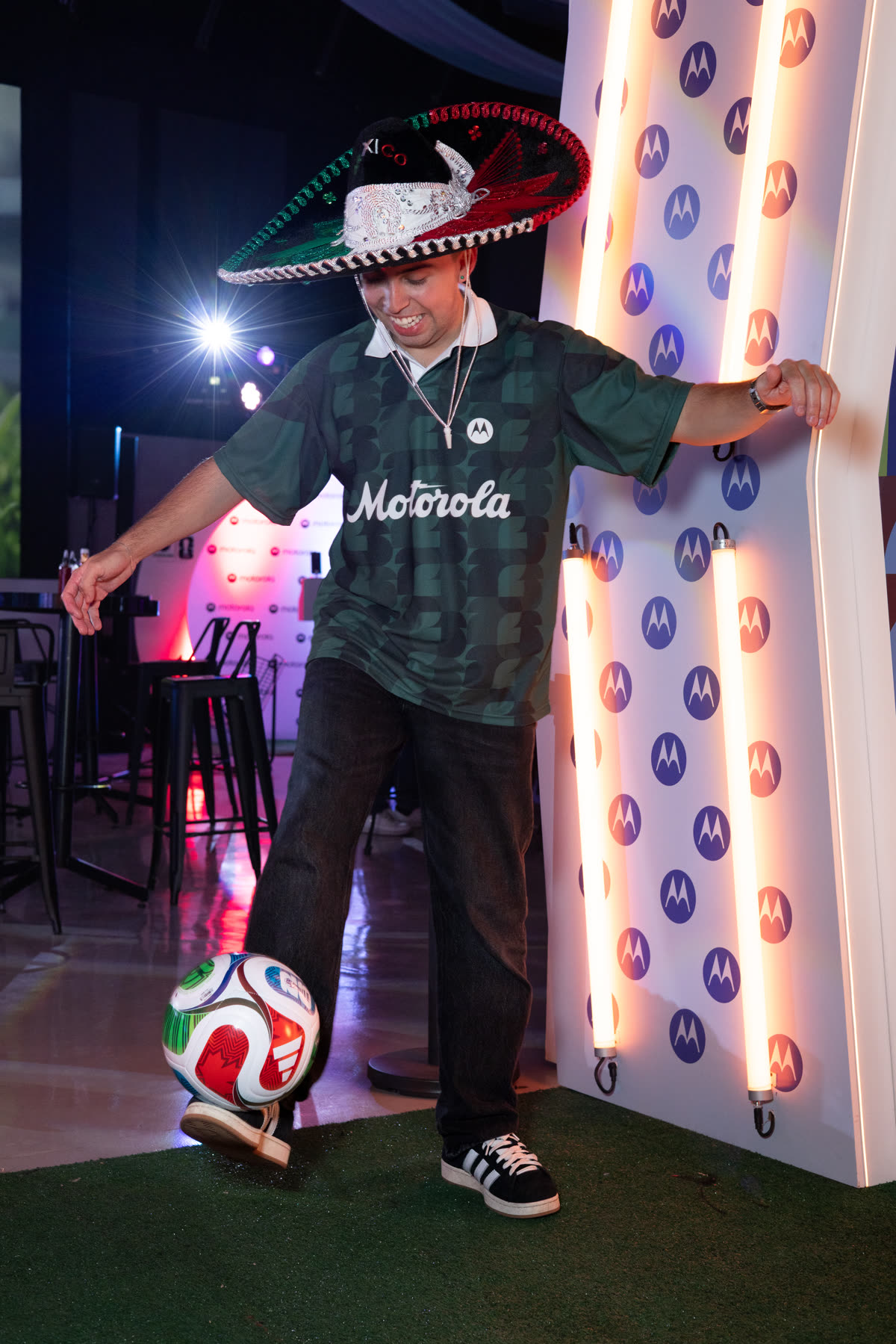
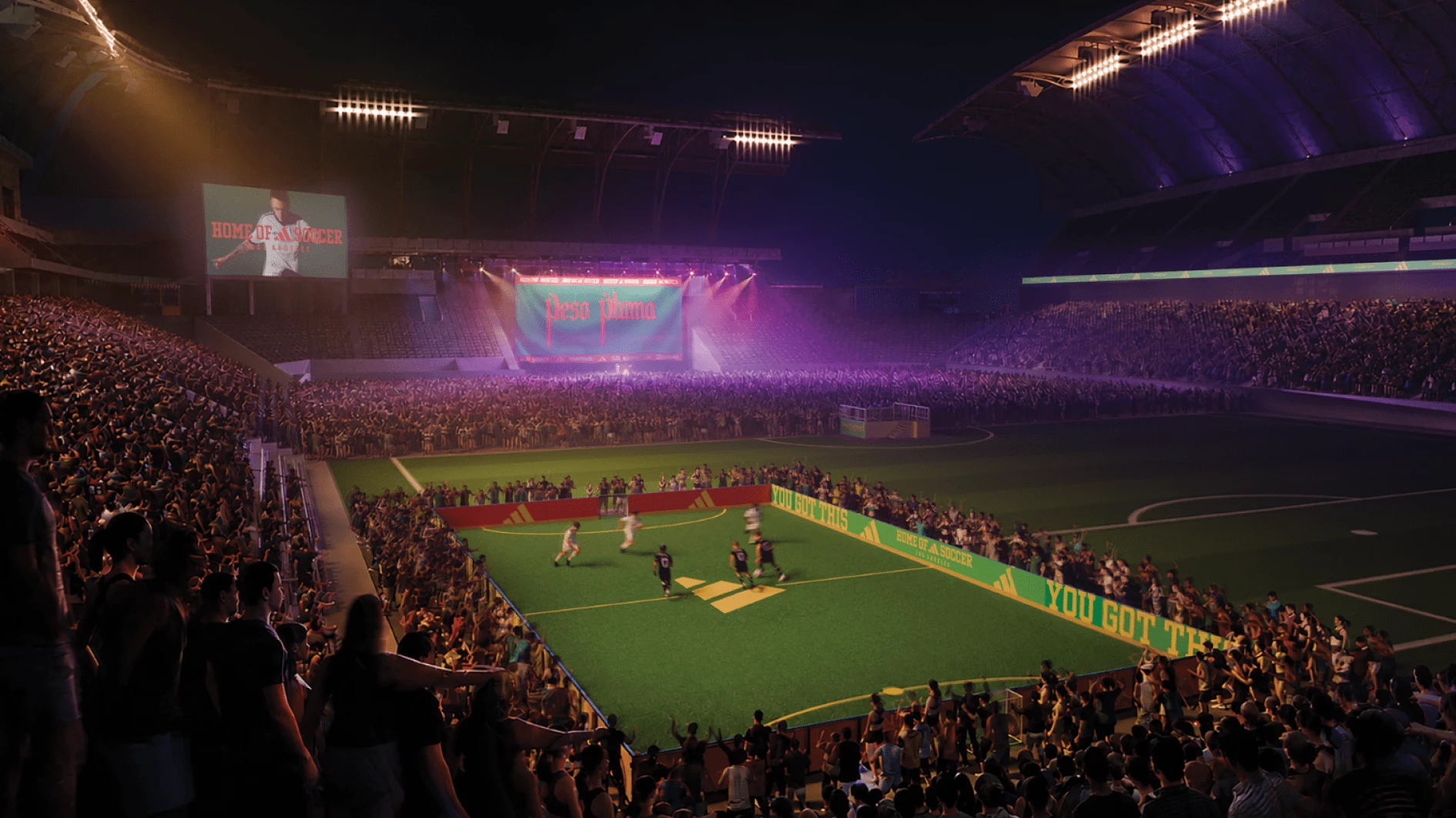
Brands did not line up for a television arms race. They built places. Adidas opened month-long "Home of Soccer" hubs, a 25,000-square-foot site at Brooklyn Bridge Park in New York and a takeover of STACKT Market in Toronto, both running into July, with more dates in Los Angeles, Houston, Atlanta, Mexico City, Guadalajara, and Monterrey. Michelob ULTRA built a Pitchside Club on the Santa Monica Pier and opened it with a 2,500-drone show over the beach, produced by Pixis Drones and narrated by USMNT captain Christian Pulisic. Motorola, the tournament's official smartphone partner, built Club Moto in Mexico City, a physical fan home for its "Football is Calling" activation around the opening match at Estadio Azteca. Visit Seattle ran repeated drone shows keyed to specific match dates. Dove Men+Care built a broadcast desk inside a Toronto mall. Champs Sports, Home Depot, and American Dream each built multi-week fan destinations that people had to travel to. Official fan fests reportedly passed two million visitors before the knockout rounds began.
Read that list again and notice what it is not. It is not a set of ads. It is a set of addresses.
The Visible Shift
The easy read is that experiential marketing is having a moment. That read is true and it is shallow. Popularity does not explain why the biggest advertisers of the year chose to pour their most important budget into things that occupy a physical footprint for weeks, with staff and permits and weather risk, instead of into the clean, scalable, measurable feed.
The tell is not what any brand said. It is where the spend landed. It landed on presence. Places people physically go, rather than impressions they scroll past.
When the largest gathering of the year becomes an excuse to build drone shows, mall broadcast desks, and city-specific fan zones, the signal underneath is about trust. Brands are quietly telling you they no longer believe the feed can carry the emotional weight on its own.
The Mechanism Underneath
Here is the part worth slowing down for.
Digital attention has become abundant, and abundance lowers value. The feed is now flooded with synthetic, optimized, overproduced content, much of it generated, most of it flattened by the same algorithm into the same shape. A viewer cannot easily tell what is real, what is paid, what was made by a person, or what happened at all. When everything can be faked or flooded, the screen stops being proof of anything.
Physical attention runs on the opposite economics. A crowd is scarce. A location is singular. A moment is time-bound and gone. You cannot fully transmit the feeling of standing in a packed square when a match turns, and you cannot mass-produce it. That is exactly why it is becoming valuable.
The feed can show the moment. The street proves it happened.
This is not a new law. It is the same mechanism that has been repricing music, luxury, and commerce all year. Value migrates away from whatever can be reproduced and toward whatever cannot. What is new is that the migration is now spatial. The unfakeable asset is no longer just provenance or craft. It is presence.
Why the World Cup Is the Perfect Stage
A brand cannot manufacture a reason for millions of people to gather in the same cities in the same weeks. The World Cup manufactures it for them.
The event supplies everything that makes physical presence work and that a brand cannot buy on its own. A global spotlight. Local host cities with civic pride on the line. Fan rituals that predate any sponsor. National identity worn in public. And sport, which remains one of the last forms of social permission to feel something loudly, together, in a shared place.
That is why the World Cup reads as a forcing function rather than a one-off. It compresses a shift that was already underway into a single visible season. The brands did not invent the move. They found the largest available stage for it.
Cannes Told the Same Story
The World Cup is the loudest version of this, and it is not the only one. Cannes Lions this June ran on the same logic. The advertising industry's own festival has always been a place brands go to be seen by each other, but this year the takeovers got bigger and more physical, and the festival itself became the attraction. TikTok took over the gardens of the Carlton Hotel. PayPal ran a pâtisserie on the Croisette. Uber floated an ice cream boat along the water. The reporting out of Cannes said the quiet part plainly: after a year of AI-led activations, the pendulum swung back to tangible, sensory experiences.
Look at who those takeovers were built for. More than 250 creators worked the Croisette, and the festival physically expanded its creator space to hold them. The official creator hub moved off the Palais rooftop down to a full beachfront, the Adobe x LIONS Creator Beach, a content studio, a stage, and a place to make things in public. Creators came because they were starved for something real to point a camera at. A feed of generated images and templated posts gives a creator nothing to react to. A real place, full of people doing a real thing, gives them a week of material they could never make at a desk.
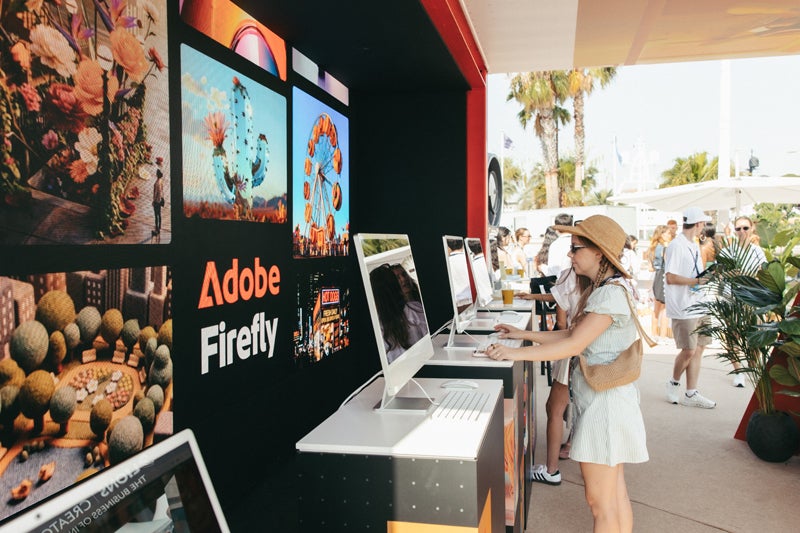
This is the part worth holding onto. What makes a moment worth your time is that a human is actually doing the thing. The effort, the risk, the fact that it is happening in real time in front of other people. That is the exact part a model cannot fake, because the value was never only in the output. It was in the doing.
People buy the story more than the final thing. A generated image of a party is worth nothing. A photograph of a party that happened, that people chose to attend, carries the whole story with it. Everyone who sees it knows a person stood somewhere, made a choice, and something real took place. That is the asset. AI can flood the world with outputs that look finished and mean nothing, which is exactly why a real room with real people in it is becoming the thing worth building and the thing worth showing up for.
What Brands Are Really Buying
Strip the drone counts and the celebrity casting and look at the asset underneath. The brands showing up in physical space are buying six things the feed has stopped reliably delivering.
- Presence. Proof that the brand was somewhere real.
- Memory. It lasts longer than a view.
- Social proof. A crowd that vouches for the moment.
- Earned footage. Made by the people who came.
- Community density. The specific energy of many people choosing the same place at the same time.
- A reason to gather. The rarest and most valuable of all.
None of those show up cleanly in a dashboard. All of them compound.
Build the Moment First
The old model ran one direction. Make the content first, then stage a moment convincing enough to justify it. The shoot was the point. The place was a backdrop rented for a day.
The new model runs the other way. Build the moment first, make it genuinely worth attending, and let the content document what actually happened. The place is the point. The footage is the byproduct.
That flip is the whole strategy. A brand that builds a real place people want to be in generates authentic footage as exhaust. A brand that manufactures footage of a place nobody attended produces something that reads as hollow, and reads that way faster than staged digital ever did, because an empty room is legible.
"We built somewhere real" is becoming the experiential cousin of "we made it simple" and "we made it gettable." It is a claim you can only make by actually doing it.
Adidas made the point almost too neatly. Its "Backyard Legends" film, a five-minute story with Timothée Chalamet assembling a team against an unbeaten local trio, alongside Messi, Bad Bunny, Lamine Yamal, Jude Bellingham, and Trinity Rodman, is the polished content. The hubs are the real thing the content points back to. The film sells the feeling. The hub is where you go to have it.
What To Do Now
One of the best pieces of advice I have heard came from a brand builder, and it fits this moment exactly.
Be a brand that does things.
Do not market to the void. Get out there, build connections, make the memories, and win people over where they actually are, socially and physically. A brand that does things gives people a reason to show up, a story to carry, and a moment they were part of. A brand that only broadcasts is asking a saturated feed to feel something on its behalf, and the feed has stopped doing that favor.
Treat the physical activation as the primary asset, and treat social as the documentation layer. Not the reverse.
Design for the people in the room first and the cameras second. If the moment works for the crowd, it will work on camera. The opposite is not true.
Make the place worth attending before you make it worth posting. A ritual beats a photo set, because a ritual gives people a reason to return and to bring someone. A set gets shot once and forgotten.
Give the brand a genuine role in the moment. If the brand is decoration, remove it and nothing changes, which means the audience will remove it for you.
And change what you measure. Reach and clicks cannot see the value of a place. The scorecard has to include affection, memory, earned conversation, creator participation, press, and the long-tail brand meaning that a real moment leaves behind. This is the dark funnel, the set of experiences that do not produce clean clicks but produce disproportionate word of mouth. It has been undervalued because it was hard to count. It is not less real for being hard to count.
Where It Goes Wrong
Physical does not automatically mean meaningful. A bad activation reads worse than none, because it puts the brand's emptiness in a room where people can walk through it.
A crowd cannot be faked for long. The absence of one is the most visible thing at any event.
And there is a tension this moment has to respect. Gen Z is under real money stress, and much of the audience is spending more deliberately, per McKinsey's State of Fashion 2026. Experiential spend that reads as extractive spectacle, a brand showing off rather than letting people in, invites backlash in exactly this climate. The durable version of this play is access, not opulence. Let people in. Access converts to affection. Spectacle for its own sake converts to resentment when money is tight.
The Place Is the Asset
The feed did not disappear. It got demoted.
For a decade the timeline was the destination, and physical events existed to feed it. That relationship has flipped. The place is now the asset, and the content is the receipt. The next era of brand attention will not be won only by making more content. It will be won by building places, rituals, and moments that deserve to become content in the first place.
The brands at the World Cup are not nostalgic for the real world. They are being rational about it. They found the one thing an AI-flooded timeline cannot reproduce, and they are buying as much of it as they can.
The place is the asset. The content is the receipt. Build a moment worth attending, and the footage takes care of itself. Manufacture footage of a place nobody came to, and the emptiness is the thing people notice.
