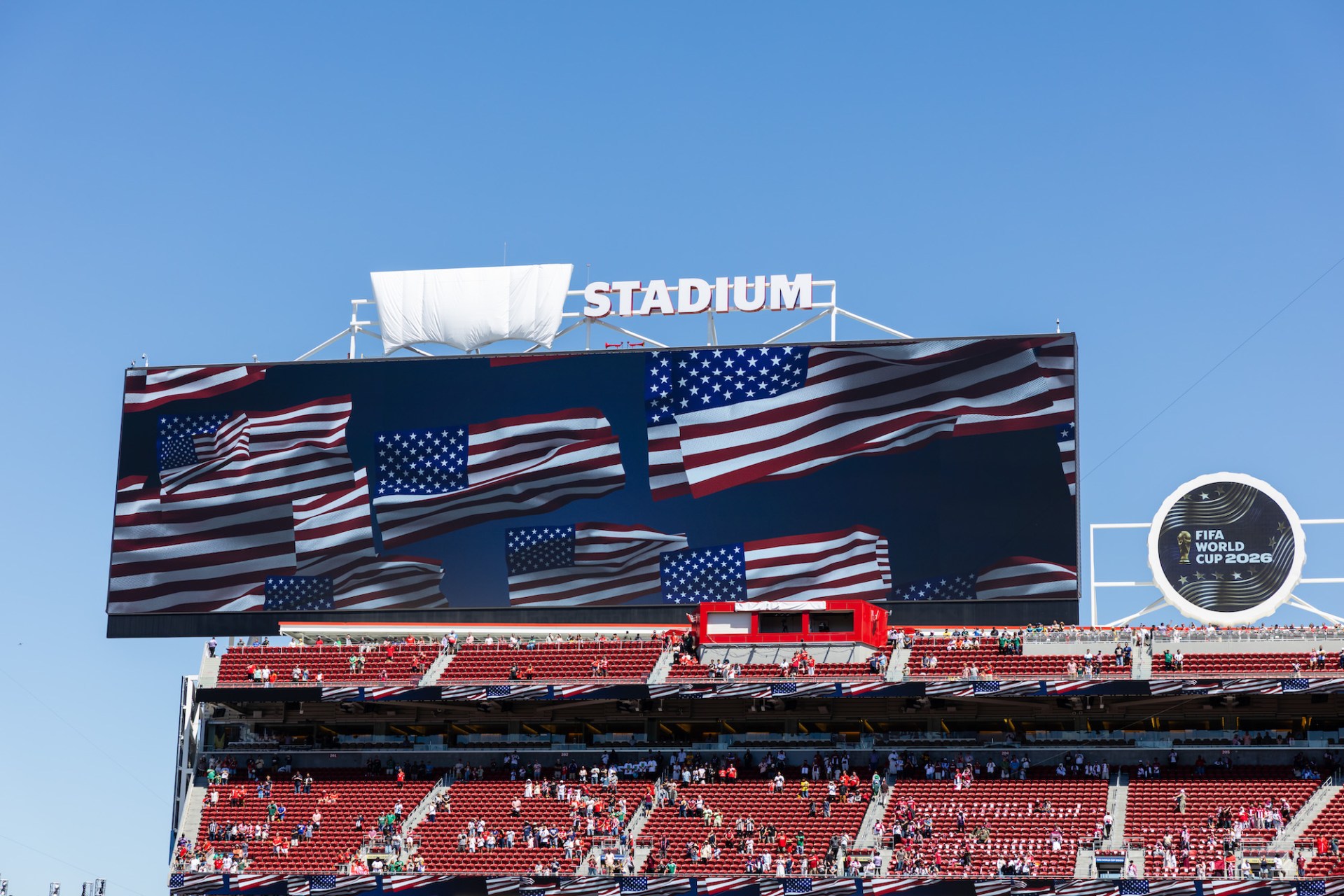
FIFA covered the Levi's logo at Levi's Stadium. Thirty-five million people named the brand anyway. That's the receipt.
- Real brand equity means the audience carries the brand without being reminded. The tarp removed the logo. 170 years of cultural accumulation meant the audience put it back.
- Logo-dependent brands can't execute this move. When the mark is load-bearing, removing it leaves nothing.
- The viral moment was the product of 170 years of cultural work, not the speed of a social team.
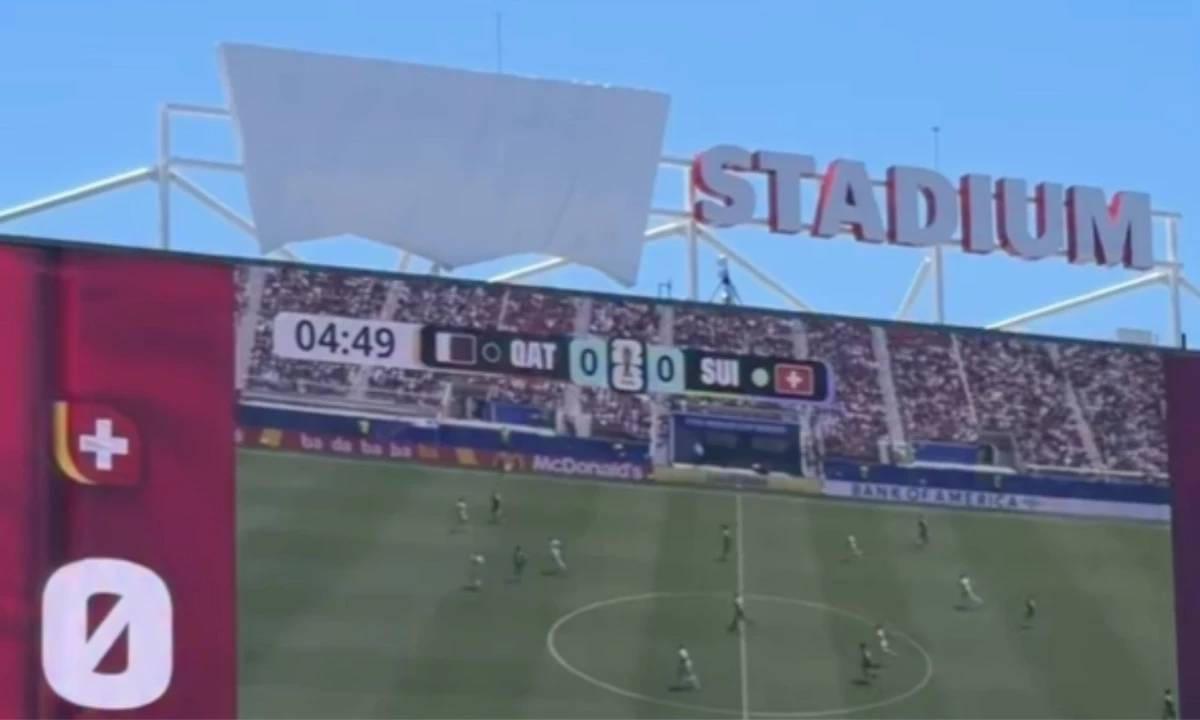
During World Cup 2026, FIFA covered the Levi's logo at Levi's Stadium. Standard tournament protocol. Sponsors of the competition get exclusivity across all signage; the venue's naming-rights partner gets tarped over. Levi's, by the rules of the tournament they'd sold their stadium name to, was erased from their own building.
Thirty-five million views later, the move that was supposed to erase them turned into the loudest thing they'd done in years. They made the tarp the campaign. They pointed at it.
The easy read is that this is a social media agility story. Brand team moves fast, turns a PR inconvenience into a viral moment, wins the news cycle. The read is accurate, but shallow. The faster you move on from the execution to the underlying mechanic, the more useful this becomes.
What Actually Happened
The campaign worked because Levi's could afford to remove the logo and still be recognized. The audience didn't need to see the wordmark on the stadium to know the brand. When the tarp went up, the name was already inside the frame, because the audience put it there.
That is the definition of brand equity: the degree to which your audience carries the brand without being reminded. A recognition score measures aided recall. Brand equity is the cognitive reflex that fires before the logo appears. Real equity means your audience has built an internal picture of you that exists independent of your touchpoints. The logo doing load-bearing work in your marketing is a signal that the picture hasn't formed yet. When you need the mark in frame to be recognizable, the mark is doing the work your brand should be doing.
When you remove the logo from a brand with real equity, you become a test. And the audience, given enough accumulated meaning, enough repeated context, enough cultural association, passes the test for you.
Levi's has a century and a half of cultural accumulation behind it. The stadium, the tarp, the World Cup context: the brand name assembled itself in the audience's head without the mark being visible. The absence became the reveal.
The Brands That Cannot Afford the Tarp
There is a category of brand for which this manoeuvre is simply not available. These are brands whose value is structurally located in the logo itself, where the mark is the price signal, the authority signal, the proof of status. The logo carries the value entirely. Remove it and what remains is an object without context.
These brands are not weak. In many cases they are enormously valuable. But their equity is logo-dependent in a way that makes the Levi's move structurally impossible. If you covered the wordmark on a luxury streetwear piece from a brand whose value lives primarily in the monogram, you would not get thirty-five million views. You would get an uncontextualised garment. The mark was doing the load-bearing work. Without it, the structure falls.
The distinction matters because it tells you where the work is. If your logo can be removed and your audience still names you, the equity is in the right place, inside the audience, not on the sign. If your logo is doing the naming for you, the equity work is not done. The logo is a proxy for something that hasn't been built yet.
If your logo were covered for 30 days, would your audience remember you existed? If the answer requires thinking about, the equity work is not done.
The Receipt
FIFA covered the logo. The brand got louder. The audience filled in the name without prompting. That is a receipt: proof that thirty-five million people had already done the work of building the brand inside their own heads.
Levi's didn't create that equity in the week of the tournament. They created it across 170 years of showing up in the places where culture actually lives. The tarp just made it legible. The brand team pointed at the absence, and the absence spoke.
Most brands trying to replicate this move will fail not because they lack the social media team or the strategic instinct. They will fail because the equity isn't there to reveal. The precondition for a tarp moment is the cultural accumulation that came before it. The social media team is the easy part.
