Microdrama was supposed to prove Hollywood could be bypassed. Instead Fox took an equity stake in the app that threatened it and SAG-AFTRA wrote a union contract for the format, within about a year, not the usual three to five. Incumbents are no longer waiting to see if a disruptive format matters. They are buying, suing, or funding their way back into control faster than trend coverage assumes.
- Fox took equity in Holywater's MyDrama app, committed to 200+ vertical titles, and SAG-AFTRA finalized a bespoke Verticals Agreement, roughly 20 percent of standard minimums, calibrated to microdrama's budgets.
- Advertisers (P&G, Albertsons) are now commissioning branded microdramas directly, and TikTok and Meta are building sequential, save-for-later "Series" features to turn the format into a habit loop, not just a passing trend.
- The same institutional instinct shows up in AI music (Suno's "Spark" incubator, launched mid-lawsuit, with an anti-disparagement clause) and agentic commerce (Amazon's injunction against Perplexity's shopping agent).
- The capture window used to take three to five years. It closed in twelve to eighteen months. The question to ask about any disruptive format is which big player is about to buy, sue, or co-opt it, and on what terms.
Vertical microdrama was supposed to be the thing that finally got past Hollywood. Sixty-to-ninety-second episodes, shot for a phone screen, built by apps most executives had never heard of. No studio deal, no union card, no theatrical release. Just a huge audience, paying real money, for serialized drama assembled outside every gate the industry spent a century building.
Fox Entertainment took an equity stake in the format last October.
Not a licensing deal. Not a distribution partnership. An equity stake in Holywater, the Ukrainian company behind the MyDrama app, with a commitment to produce more than two hundred vertical titles over two years. Fox's first move was not a new commission. It was recutting its own primetime show, an entire season of "Farmer Wants a Wife," into 101 sub-two-minute episodes for the app. The company didn't compete with the disruption. It became a shareholder in it, then started feeding it recycled inventory.
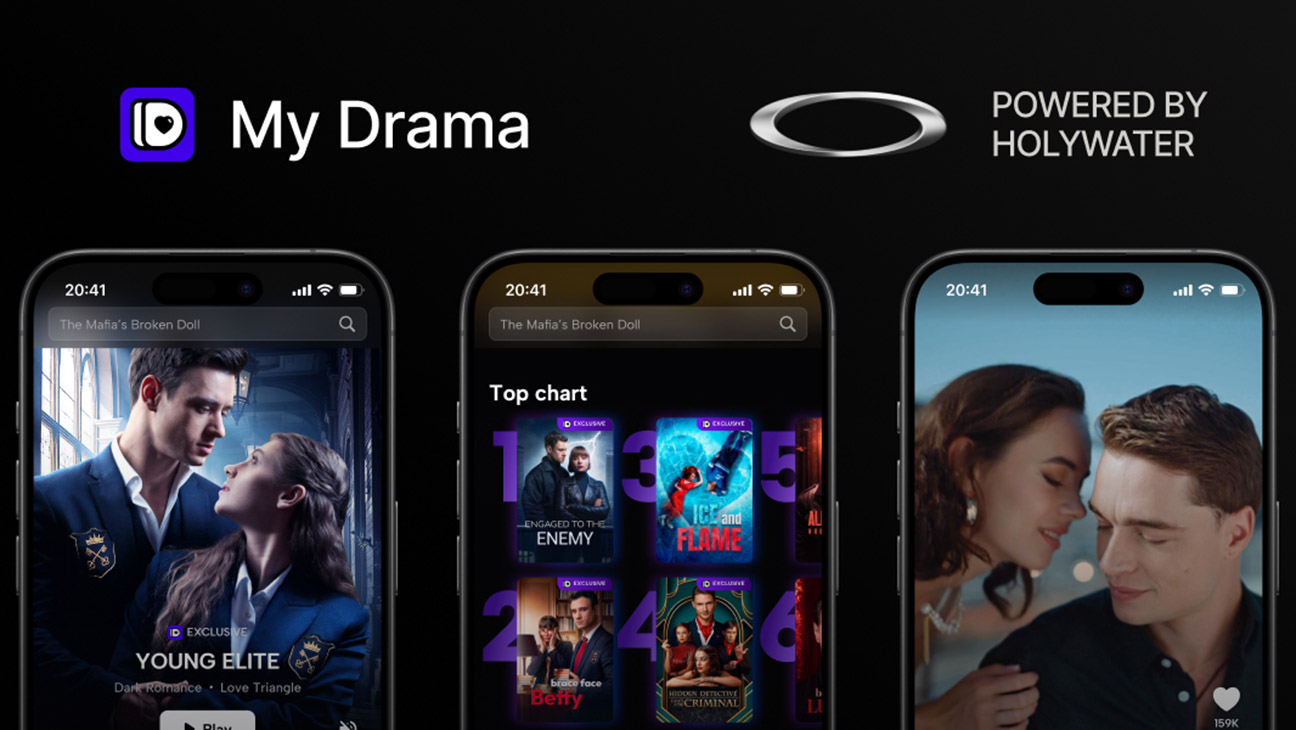
What Happened
Microdrama crossed from Chinese-export curiosity to an eleven-billion-dollar 2025 business, on a trajectory toward twenty-six billion by 2030. ReelShort alone posted 1.2 billion dollars in 2026 revenue and partnered with Paramount to promote a theatrical release. Fox signed creator Dhar Mann to a forty-title vertical deal. That much is a normal story about a hot new format attracting money.
The part that is not normal is what SAG-AFTRA did.
The union did not ignore microdrama, and it did not try to kill it. It built a bespoke Verticals Agreement, finalized in late 2025 with its first credited productions in early 2026, setting a minimum pay scale at roughly a fifth of standard SAG-AFTRA daily minimums, calibrated specifically to the format's budgets and shooting pace. A legacy labor institution looked at a format built explicitly to avoid union protections and wrote a union contract sized to fit it.
The Platforms Leading the Capture
These are the companies and platforms defining the institutional game right now:
This is the state of capture: independent builders built the format. Platforms provided the distribution. Incumbents saw the numbers and moved into the stack. Within eighteen months, the future of the format is no longer controlled by the startups that created it.
Why This Reads as Capture, Not Competition
Microdrama's original threat to Hollywood was structural, not aesthetic. It proved a mass audience would pay for serialized drama with none of the production values, union protections, or distribution gatekeeping that television relies on to justify its own cost. That is the kind of threat that is supposed to take years to metabolize, if it gets metabolized at all. Cable took the better part of a decade to fully fold into the establishment it once threatened. Streaming took most of one too.
Fox and SAG-AFTRA did the equivalent in about twelve months.
They did not compete on quality, and they did not try to legislate the format out of existence. They moved fast enough to become an owner and a regulator of it before an outside player, or no one, set the terms. That is the whole mechanism. The format's growth curve now happens on industry terms, priced and unionized by the industry it was supposed to route around.
The gatekeeper didn't get bypassed. It bought a stake in the bypass and wrote its labor law.
Advertisers Are Already Lining Up
While Hollywood was busy taking equity, advertisers started commissioning the format directly. P&G and Albertsons built "Rico's Tacos," a branded microdrama aimed at Latino audiences and released in one-to-two-minute episodes, using Albertsons' own retail media data to target it. P&G's Native personal care brand released a fifty-part microdrama of its own earlier this year. This is not an established player defending its turf. It is a marketer treating microdrama as a new channel worth writing original episodes for, the same way brands once built for YouTube pre-roll or Instagram Stories.
The platforms are building the habit loop to match. TikTok has run a paywalled, sequential Series feature since 2023 and launched its own standalone microdrama app, PineDrama, in the US and Brazil this year. In June, Meta began testing an equivalent "Series" feature for Instagram and Facebook Reels, giving creators a dedicated hub where viewers can watch episodes in order and pick up where they left off. Meta's own stated goal is bringing audiences back repeatedly and building stronger viewing habits, the same appointment-viewing mechanic broadcast television spent seventy years perfecting.
Put those two moves side by side. Brands are commissioning serialized content built to be binged and returned to. The platforms are simultaneously building the save-for-later, sequential-hub infrastructure that makes the binge-and-return loop work at scale. Microdrama is not just being captured by Hollywood's labor and capital structure anymore. It is being built into the plumbing of the two largest short-form platforms on earth, which means it has stopped being a temporary craze big players are managing. It is becoming permanent infrastructure.
Then Luxury Made It a Fixture
The clearest sign a format has stopped being a growth hack is when luxury adopts it, because luxury is the category with the most to lose from looking cheap. In April 2026, Marc Jacobs released "The Scene," a microdrama written by and starring Rachel Sennott, with cameos from Francesca Scorsese, True Whitaker, and Sandra Bernhard. Sennott races around Manhattan chasing a Met Gala invitation she never gets, carrying the brand's new Scene bag through every scene, including shots from inside the bag. It dropped ten days before the Met Gala. The timing was the point.

Marc Jacobs' "The Scene" campaign. Watch on YouTube.
What matters is not that a fashion house made one funny vertical video. It is that Marc Jacobs framed the video as the first installment of an ongoing series, part of what it called an evolution of its approach to visual storytelling that unites fashion, film, and entertainment. By June the brand extended the same episodic logic into its "Question Marc" summer campaign. That is the tell. The microdrama is not a stunt the brand tried once. It is being installed as a permanent layer of how the brand talks to its audience.
Marc Jacobs' microdrama on TikTok. @marcjacobs
This is the same instinct running through the rest of the story, seen from the other end. Fox and SAG-AFTRA absorbed the format from above, through equity and labor law. P&G absorbed it as a performance channel. Marc Jacobs absorbs it as brand language. The format keeps climbing the value chain, from Chinese-export apps to mass-market CPG to luxury, and at every level the adopter treats it the same way. Not as a trend to ride, but as a layer to own and build in permanently. When the disruption becomes a fixture in the toolkit of the players it was supposed to threaten, it has finished being a disruption.
What It Actually Looks Like
If you have not seen a microdrama yet, the format is immediately recognizable: 60 to 90 seconds per episode, fast cuts, emotional peaks at the cliffhanger moment, and a play button on every platform begging you to watch the next one. A 55-episode story unfolds in episodes that feel half-finished by design, each one ending at exactly the moment that would make you pause in real life.
DramaBox's "Can't Get Enough Of You" is a 2026 example. The premise: a CEO meets his quiet new assistant, discovers she's been raising their secret child for two years, and every episode for two months has served one purpose: make you hit play again. The production quality is broadcast-level. The storytelling is structured around addiction mechanics. The audience is global. Younger every season.
Watch a clip below to see the actual pace and rhythm:
The format is simple. The grip is not.
It Is Not Just Hollywood
Two more things happened in the same stretch of 2026, in industries that have nothing to do with each other on the surface.
Suno, the AI music generator, is mid-lawsuit with Universal Music Group and Sony, both still unresolved after Warner and Udio settled. In June, facing that exposure, Suno launched an artist incubator called Spark. Read the actual contract and it carries an anti-disparagement clause barring participants from public criticism, a grant of perpetual rights to an artist's name and likeness, and a sixty-day ban on working with rival AI music companies. A company under existential legal threat responded not by resolving the consent question underneath the lawsuit, but by recruiting the exact population that could organize against it into a program whose fine print keeps them quiet. SZA called artists using the tool "disgusting." Diplo, who has allegedly held equity in Suno while using it to train on what he called the best and brightest Black writers and producers, said there's no fighting AI. Both things are true about the same industry at once.
Then there is Amazon. In March, a federal judge granted Amazon a preliminary injunction blocking Perplexity's AI shopping agent from operating on the site, after Amazon warned the company at least five times to stop disguising its bot as a normal browsing session. OpenAI, which had launched its own "Instant Checkout" the previous fall as proof that AI agents would soon transact directly with retailers, quietly scaled the feature back around the same time. About twelve of Shopify's million-plus eligible merchants had ever turned it on. The dominant retailer did not lose the checkout to an AI agent. It sued to keep it, and won.
Three Industries. Three Weapons.
Fox Entertainment
Equity + Union Contract
Took a stake in Holywater, wrote labor law with SAG-AFTRA.
Amazon
Federal Court Injunction
Sued Perplexity to block AI agents from shopping on the platform.
Suno
Funded Incubator + Gag Clause
Launched Spark mid-lawsuit with anti-disparagement contract.
Same instinct: do not let the format finish disrupting you. Get inside it first, and set the terms from there.
The Signal Underneath
None of this is really about short-form video eating long-form television, or AI eclipsing session musicians, or bots replacing the checkout button. Those are the surface stories, and they are the ones most 2026 trend coverage is still telling.
The real signal is a timeline compressing.
The historical pattern was that a disruptive format got three to five years of independent life before an established industry moved to absorb or block it. Long enough to build its own capital, its own stars, sometimes its own leverage strong enough to negotiate the terms of the eventual merger as something closer to equals. Twelve to eighteen months is not that. Twelve to eighteen months means big players are no longer waiting to see if a format matters. They are treating the pattern itself, buy equity, write the contract, or file the injunction, as a standing playbook they can execute the moment a format looks like it might.
What This Means If You Are Building Something
The question worth asking about any fast-growing format that threatens a large company is not "will this replace them." It almost never does, not cleanly, not on schedule. The better question is which large company is about to buy it, sue it, or fund a program that quietly neutralizes its critics, and on what terms.
If you are building in an adjacent format, the SAG-AFTRA Verticals Agreement is a template worth reading closely, not because the pay scale is generous, but because it shows what institutional legitimacy actually looks like the moment it arrives. It shows up when an established player decides your format is big enough to be worth controlling. Not before.
When a large company offers you a "creator fund," "partner program," or "incubator," treat it like a contract that locks you in. It is. Check the fine print for clauses that prevent you from criticizing the company and see how long they control your work. The real question: can you still speak publicly against them after you join? If the answer is no, the funding is really about controlling what you can say.
And if you are counting on AI agents transacting directly with your customers inside the next year or two, the retailer with the most leverage is actively litigating against that future in federal court, and the AI lab that tried hardest to build it already backed off when the operational plumbing, tax remittance, inventory sync, fraud, turned out to be harder than the chat interface made it look.
The Reversal
The story microdrama was supposed to tell is that a mass audience will follow the content wherever it is cheapest and easiest to get, gatekeepers or not. That story is true, and it is also no longer the interesting one.
The interesting story is that the gatekeepers noticed faster than history says they should have, and instead of fighting the format on its own ground, they bought a piece of it and wrote its labor law. Disruption did not fail. It just got absorbed before it finished happening, by an industry that has apparently gotten much better, and much faster, at recognizing its own reflection in something trying to replace it.
The Format
Editorial moments from @reelshortapp on Instagram
The Hollywood Reporter, Variety, SAG-AFTRA, Deadline, The Wrap, Marketing Dive, Marketing Dive on Marc Jacobs, V Magazine, TechCrunch, ArtistDirect, Variety on SZA, CNBC, CNBC on OpenAI.
