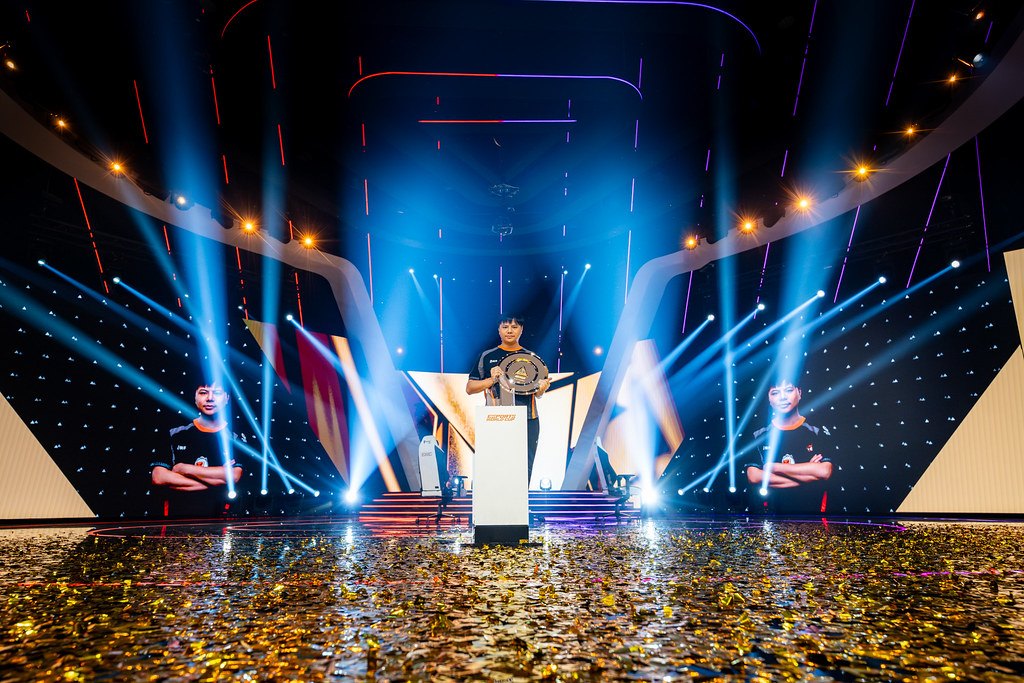
The Esports World Cup has the biggest prize pool in the history of competitive gaming, 75 million dollars. This summer it had to move countries. The tournament, the flagship of Saudi Arabia's sovereign wealth fund, was relocated from Riyadh to Paris after the regional conflict this year made the host country unworkable. The number reads as dominance. It is a tell of fragility. Culture manufactured by capital depends on conditions the capital cannot guarantee, and the lesson is blunt: culture you buy is more fragile than culture you enable.
- The 2026 Esports World Cup, funded by Saudi Arabia's Public Investment Fund, was moved from Riyadh to Paris (6 July to 23 August) after the regional conflict this year, which also canceled the Formula One Saudi Grand Prix.
- The prize pool is a record 75 million dollars across 25 events. The same fund took Electronic Arts private for 55 billion dollars, the largest all-cash buyout in the industry.
- Institutional scale and cultural heat are diverging: the tournaments grow while some anchor titles are described as past their peak. Scale is not the same as relevance.
The Esports World Cup has the biggest prize pool in the history of competitive gaming: 75 million dollars across 25 events. This summer it is being held in Paris. It was supposed to be in Riyadh. That is the whole story, and it is worth sitting with, because the money did everything money can do and it still could not keep the event in the country built to host it.
The tournament is the flagship of Saudi Arabia's Public Investment Fund, the same fund that just took Electronic Arts private in a 55 billion dollar deal, the largest all-cash buyout the games industry has ever seen. The event was moved to Paris, running July 6 to August 23, after the regional conflict this year brought attacks on Saudi infrastructure, the same instability that had already canceled the Formula One Saudi Grand Prix in April and led airlines to pull regional flights. The prize pool went up. The venue moved a continent away.
What the Money Bought, and What It Didn't
Here is what capital purchased: the largest purse in esports, a three-year deal with Epic that puts Fortnite and Rocket League on the stage through 2028, publishers lining up, a national target of building gaming into a real share of the economy by 2030. That is an enormous amount of institution, assembled fast, from the top down.
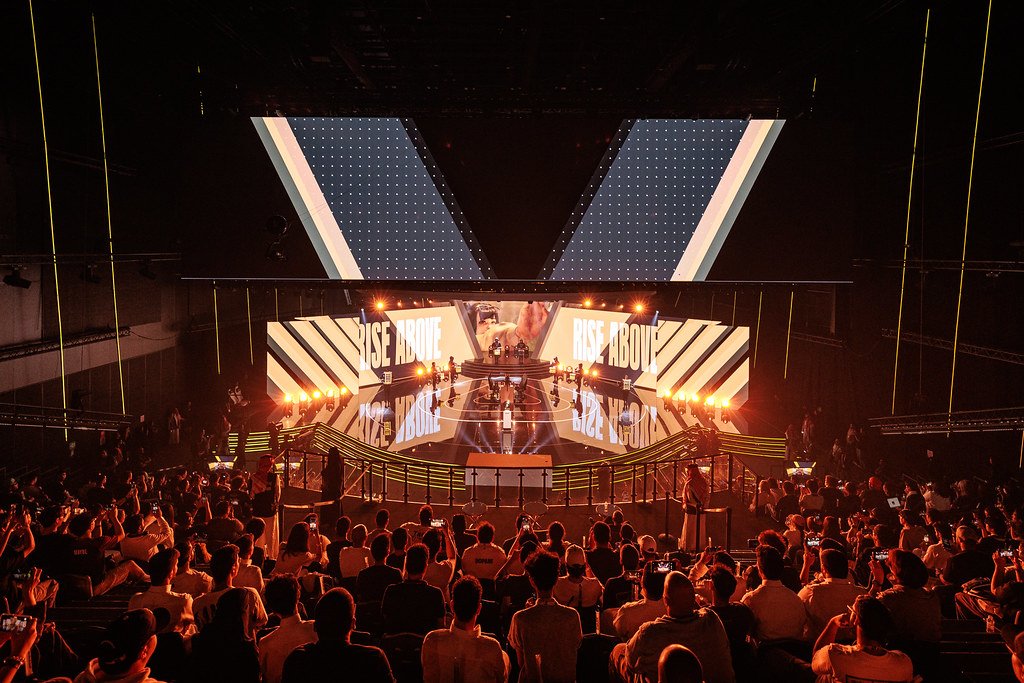
Here is what it could not purchase: the ground. A cultural institution manufactured by state capital still depends on conditions the capital cannot guarantee, and the most basic of those is that the event can physically happen where it was built to live. When that condition failed, the whole showpiece packed up and relocated to someone else's city.
Scale Is Not Momentum
The number is doing something specific, and it is not what it looks like. A record prize pool reads as dominance. Read it again and it reads as a substitute. You escalate the money when you cannot assume the loyalty. Look at the split underneath: the tournaments are bigger than ever, while some of the titles anchoring them, Fortnite among them, are widely described as past their cultural peak. Institutional scale and cultural heat are moving in opposite directions. The mega-event is swelling at the exact moment the organic relevance it is renting cools. When you have to keep raising the prize to hold the room, the prize is not proof of health. It is the invoice for its absence.
Culture you buy is more fragile than culture you enable.
The Part You Cannot Separate Out
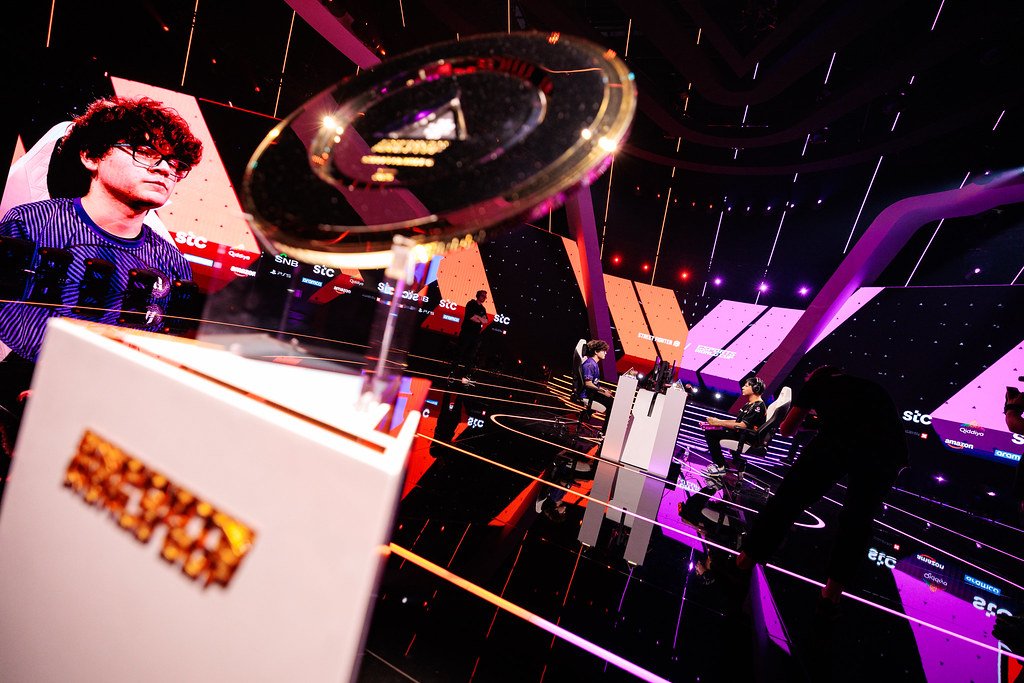
None of this is detachable from why the money is being spent. Human-rights organizations including Amnesty International have consistently described Saudi Arabia's expansion into gaming, football, and other global spectacles as sportswashing, the use of sport and culture to soften a reputation. Whatever one concludes about that debate, it creates a hard operating fact for any brand weighing association: the alignment is politically live and can be reframed overnight. A single escalation turns a sponsorship into a statement no one signed up to make. Audience size cannot offset that, because the risk was never about reach. It is about what your logo is standing next to when the story changes.
What This Means If You Are Building Something
Strip the geopolitics and a clean strategic lesson sits underneath, and it applies a long way from esports. There are two ways to get inside a culture. You can buy it, rent the spectacle, fund the prize pool, put your name on the stage. Or you can enable it, underwrite the infrastructure a scene already runs on, the venues, the creators, the tools, and let the culture keep being itself with you behind it. Bought culture is fragile because you are renting relevance you did not grow, and the lease can be broken by things you do not control. Enabled culture is durable because the scene owns it, and a scene cannot be evicted from itself.
The Esports World Cup is a case study, not a partnership. Before you buy your way into a culture, ask one question: if the money stopped tomorrow, would any of this still be here? If the answer is no, you did not join a culture. You rented a set, and someone else owns the building. Fund the participation infrastructure a check alone could never create, and you get the one thing the check alone never buys: permanence.
The biggest prize pool in the history of the sport could not keep its own tournament in its own country. That is the tell almost everyone is misreading. The 75 million dollars was never a show of strength. It was the cost of renting a relevance that, the moment the ground shifted, packed up and moved to Paris. You can buy the tournament. You cannot buy the ground it stands on, and the ground was the only part that was ever the culture.
Wikipedia: 2026 Esports World Cup, Techtimes, Esports Insider, Bloomberg, Wikipedia: EA buyout.
