The Reframe
Rocket came in with a new CMO and a mandate to reposition. The brand had spent years being defined by rates, refinancing, and the machinery of mortgage. What it needed was humanity. Home buying is one of the most emotionally loaded experiences a person can go through: aspiration, anxiety, confusion, and vulnerability, often arriving at the same time. The industry had been treating it like a transaction. Rocket saw the gap and decided to step into it.
The campaign brief arrived in the middle of an election cycle. One month to build an entirely new creative identity: new visual language, new sound, new emotional register. That kind of timeline forces you to find what's true before you have time to talk yourself out of it.
The Insight
Most home buyers are looking for help navigating complexity. The industry defaults to rates and calls to action. The campaign was designed to sit with the tension instead.


The Table
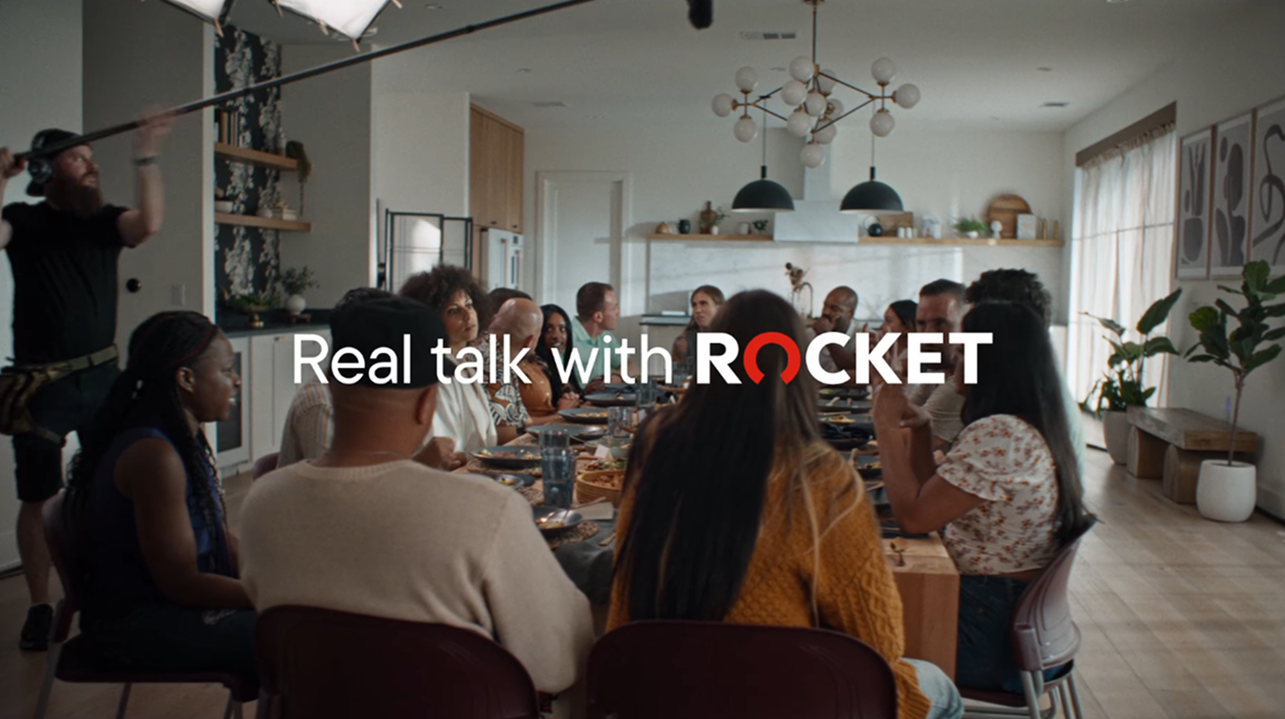
The creative solution was a fake open house. Guests arrived believing they were touring a potential new home. Instead, they found a table set for a shared meal among people with something in common: the experience of navigating a housing market that felt designed to exclude them. The setting was intimate. The tension was real.
A question bowl passed around the table prompted conversations that no focus group could have manufactured. What does it actually feel like to be priced out of your neighborhood? What do you do when the offer falls through for the third time? Unbeknownst to the guests, one of the people at the table was Rocket's Chief Revenue Officer, there to listen. That made the event something that felt genuinely human on camera, because it was.


Going Deeper: Individual Stories
The table conversation was the opening move. The second act was going back to each individual and sitting with their story in full. Exit interviews. Tailored long-form segments. Content that honored the difficulty rather than resolving it: the complexity in Nicole's situation, the persistence in Kayla's, the resilience Richie and Ella each carried into an incredibly difficult process.
Treating the individuals as characters with ongoing narratives, rather than subjects of a single shoot, gave the campaign a dimension a single TVC can't carry. Their stories had a before, a during, and an after.
"Emotionally driven campaigns don't manufacture feeling. They find it in real people and have the discipline to get out of the way."





From Talk to Action: The Platform Play
Conversation generates content, but not all content earns attention on every platform. Taking the wealth of material from the table and individual interviews, the campaign expanded into TikTok and Instagram with a different editorial logic. SEO data and trending social conversations revealed the questions people were actually asking about home buying -- the ones they typed into a search bar at midnight, not the ones they'd say out loud in a focus group. Those questions became the content.
The result was a series that met people inside their own anxiety. Curiosity converted into confidence. The campaign offered company in the difficulty, and then offered Rocket as what could make that difficulty manageable.
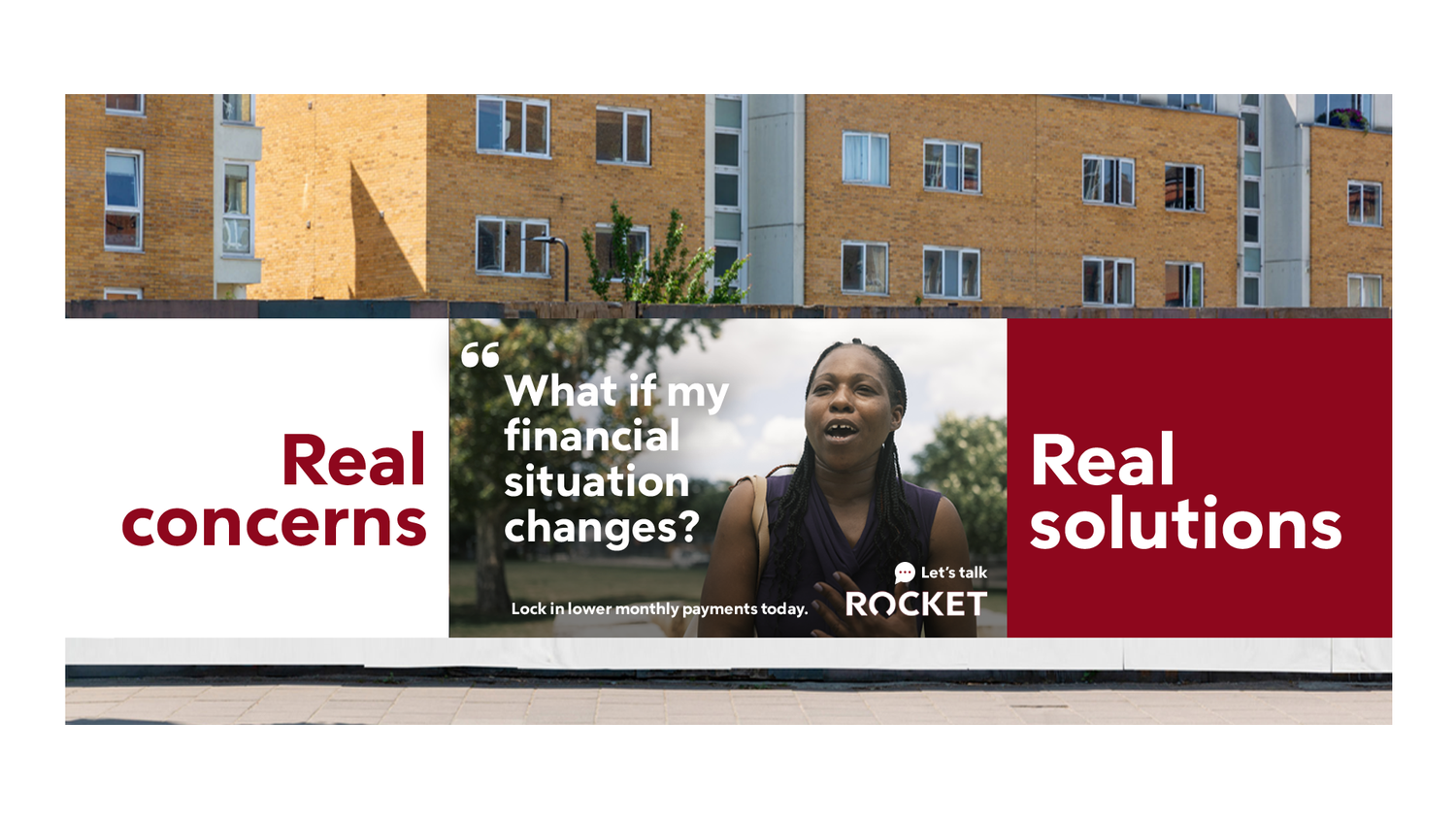
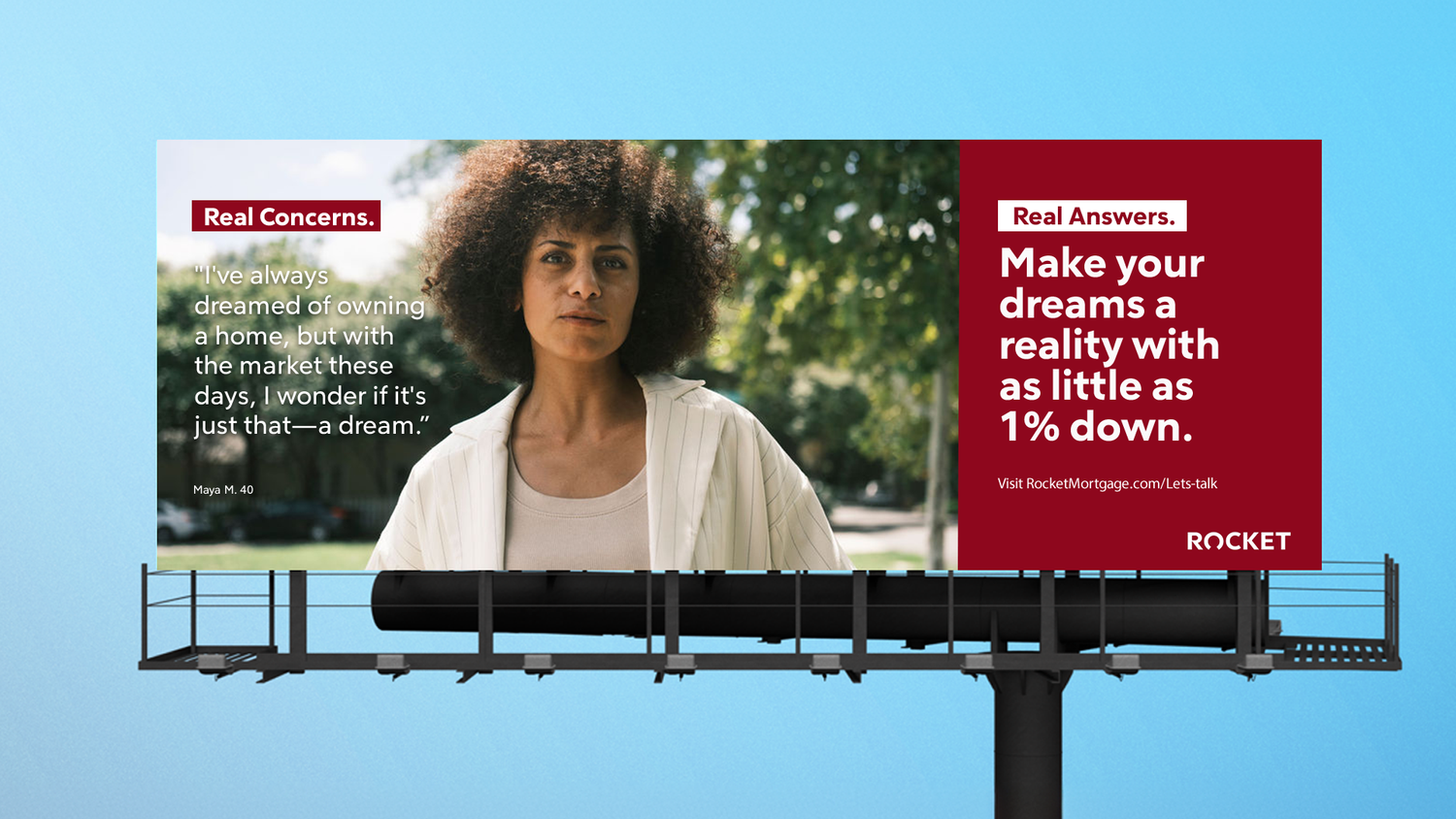
Radio: The Sonic Layer
The campaign extended into radio as a genuine creative opportunity. The sonic texture of the table (the clink of silverware, the warmth of overlapping voices, the particular sound of people being honest with each other) was woven into the radio spots as an auditory signature. The listener is placed at the table before a word is spoken. That's brand identity built from the sound of real conversation outward.
The principle: Every touchpoint in a campaign has a sensory register. Most campaigns think visually and treat everything else as secondary. This one started with the sound of real conversation and built outward. The visual and the sonic told the same emotional story from different entry points.
