Most companies avoid real-time social engagement. It requires giving up pre-approved messaging and trusting the social team to represent the brand without legal review. That's a real risk. It's also the only way to be relevant in a media environment that moves faster than any approval process.
When I joined Motorola, the social team was still finding its footing. The moment that changed the approach wasn't a campaign launch. It was recognizing that Gen-Z had already started doing something for us -- treating the original Razr as a nostalgia artifact, and flooding social platforms with it. That was our window.
The Newstalgia Moment
The early 2020s were the height of what you could call the newstalgia era -- a cultural pattern where Gen-Z embraced objects and aesthetics from a recent past they were too young to actually remember, reinterpreting them through their own sensibility. The flip phone fit perfectly. An object that predates their childhood, now appearing everywhere in their content.
The original Razr had brand equity Motorola hadn't had to maintain. The audience was keeping it warm for them -- posting it, referencing it, building nostalgia for something they'd never owned. The strategic question was whether to acknowledge that conversation or let it run without the brand present in it.
A brand showing up in an organic conversation about its own heritage succeeds or fails on execution: reading the room, matching the tone, contributing something real rather than inserting the logo. The risk of getting it wrong was real. The cost of staying silent was higher.
Showing Up in the Comments
The play was direct: find posts where the Razr appeared organically and comment with personality. Sharp. Self-aware. Relevant to what was happening in the thread. No promotional language. No branded copy.
This requires a different kind of trust architecture than most brands are comfortable with. The social team needed real-time decision authority. The approval process for a comment has to be measured in minutes, not days, or the moment is gone. Building that trust -- demonstrating that the team had the judgment to represent the brand in live, unscripted environments -- was as much a part of the strategy as the comments themselves.
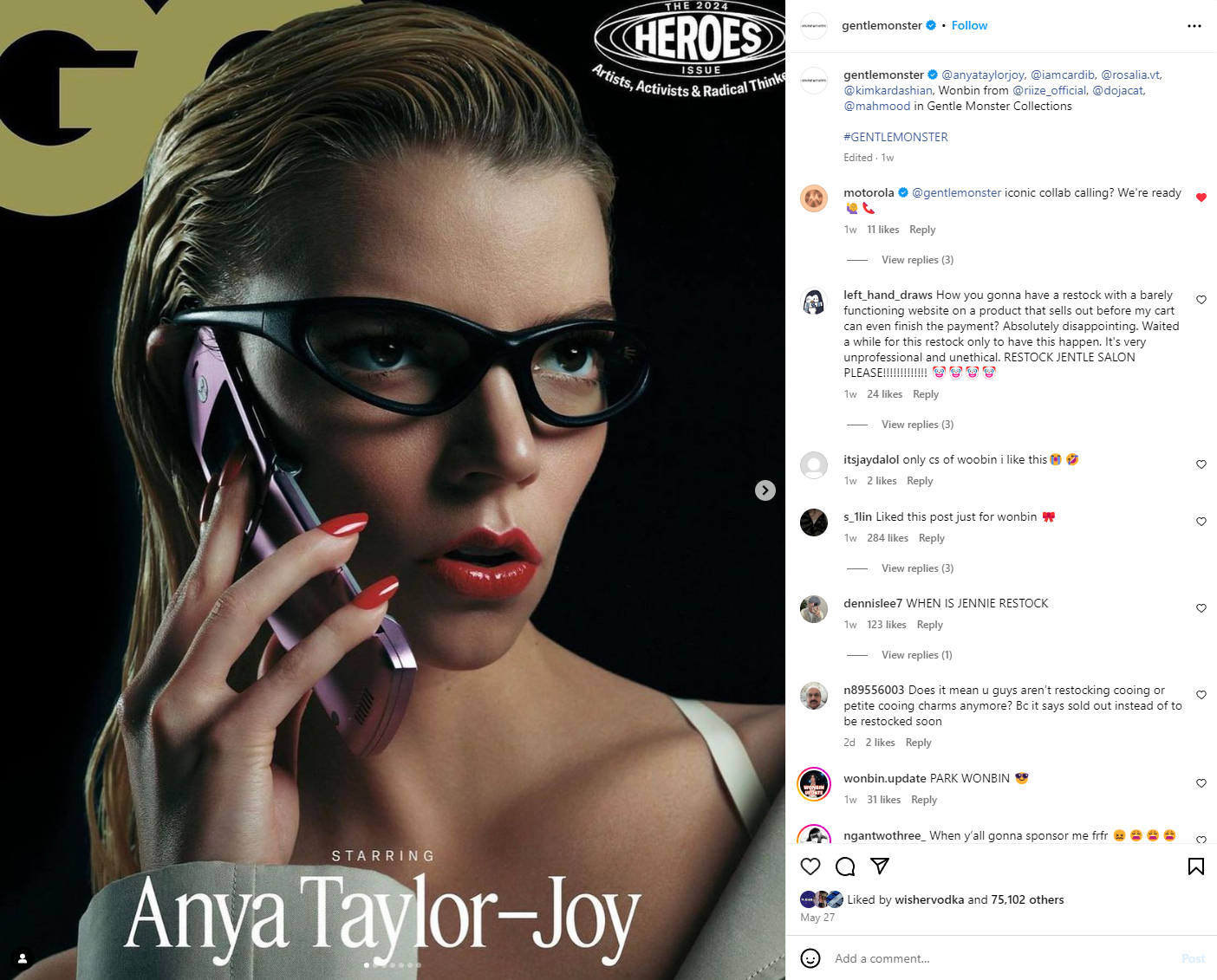
Motorola entering the organic Razr nostalgia conversation
"Brands that are genuinely social on social media participate, not broadcast. That requires a different skill set and organizational structure."
What Participation Opened
Real-time engagement creates reciprocity. When a brand shows up in an organic conversation, audiences respond in kind. Comments sections become places people return to. Threads generate their own momentum. The brand becomes a participant in something larger than its content calendar.
For Motorola, the Razr nostalgia engagement opened doors to wider collaboration and creator relationships that wouldn't have been accessible through traditional outreach. When a brand has demonstrated that it can show up with the right energy, the community starts to invite it in rather than waiting to be pitched.
Relevance in social requires repeated, real-time action in response to what's happening in the culture. The Razr nostalgia moment was a gift. It only paid off because Motorola had built the organizational capacity to act on it quickly. That capacity is the asset. The moment is just the opening.
