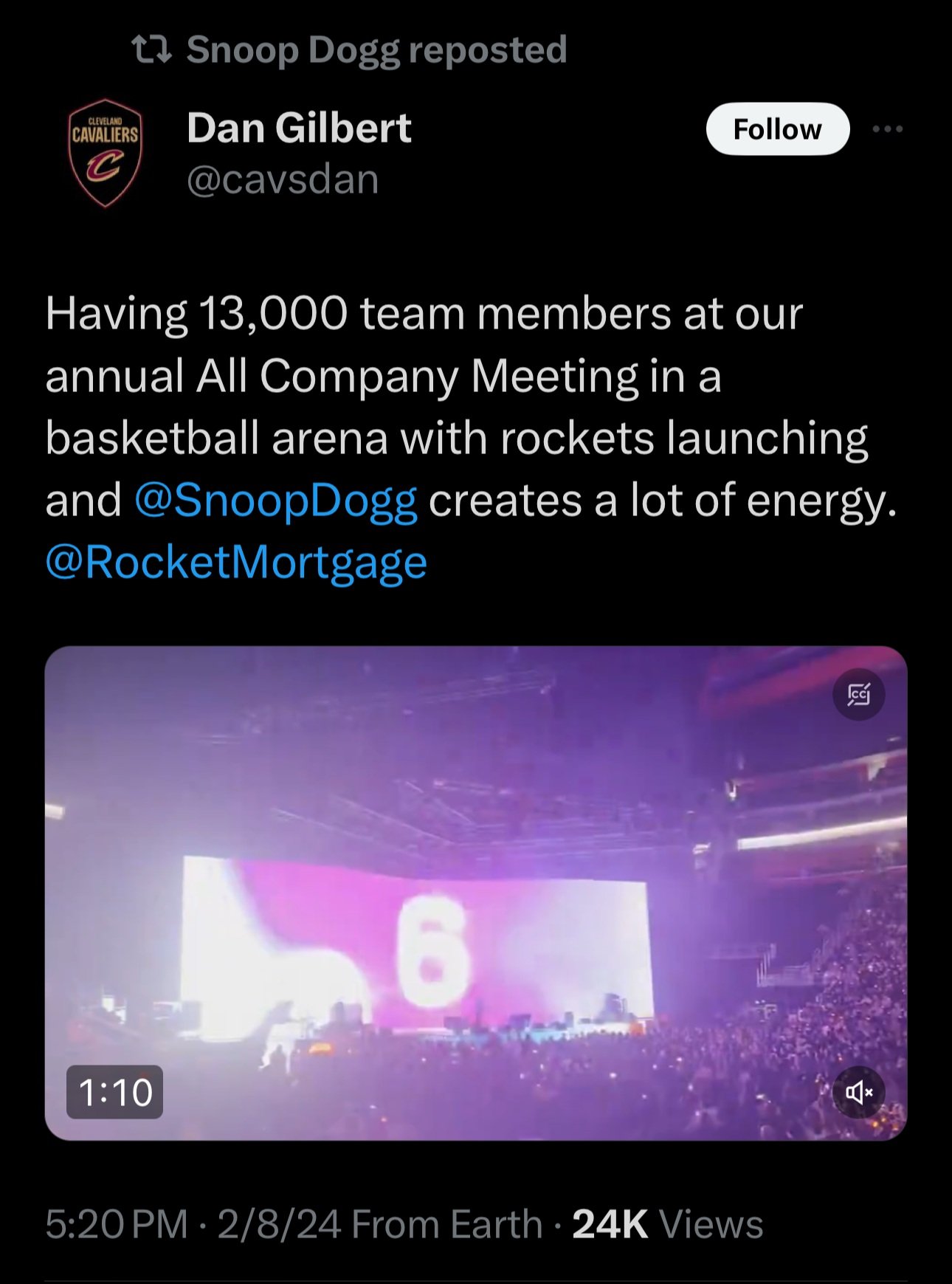
When Snoop Dogg is the headliner, the opening act has exactly one job: don't get forgotten before he walks on stage. The animated presentation slides I designed for Rocket Mortgage's AI townhall weren't there to deliver a briefing. They were there to set a tone, carry a narrative, and make the event's central argument -- about AI-fueled homeownership and where the organization was going -- land with enough visual energy to survive the proximity to celebrity.
They did more than survive. The slides caught viral moments on social media. That's not a typical outcome for an internal corporate presentation, and it tells you something about what happens when you treat stakeholder communication as creative direction rather than information delivery.
The Problem with Conventional Presentations
Most executive presentations operate from a deficit model: here is data, here are bullets, here is a conclusion. The goal is comprehension. The problem with optimizing for comprehension is that comprehension and memory are not the same thing. People understand a lot of presentations they never think about again.
Rocket Mortgage needed something different. The townhall was introducing a significant strategic shift -- AI as a fundamental driver of homeownership strategy -- to a stakeholder audience that included skeptics, enthusiasts, and the full range of organizational emotions that accompany major change. The presentation couldn't just inform. It needed to move people.
The slides had to hold their own as a visual experience before Snoop Dogg took the stage. That constraint is clarifying. It pushes you past competent deck design into something that has its own energy, its own pacing, its own visual ambition. Good enough wasn't available as an option.
Animation as Argument
The choice to use custom animation rather than static slides was a strategic one, not a stylistic preference. Animation controls time. A well-animated slide sequence can slow a moment down -- hold the audience in a frame long enough for the idea it contains to settle. It can also accelerate, building energy toward a reveal in a way that static imagery can't replicate.
The AI-homeownership narrative had both kinds of moments. The strategic vision required sustained attention and a sense of weight -- something you feel arriving rather than appearing. The energy points -- the data that surprised, the possibilities that opened up -- required acceleration. The animation system was built to deliver both.
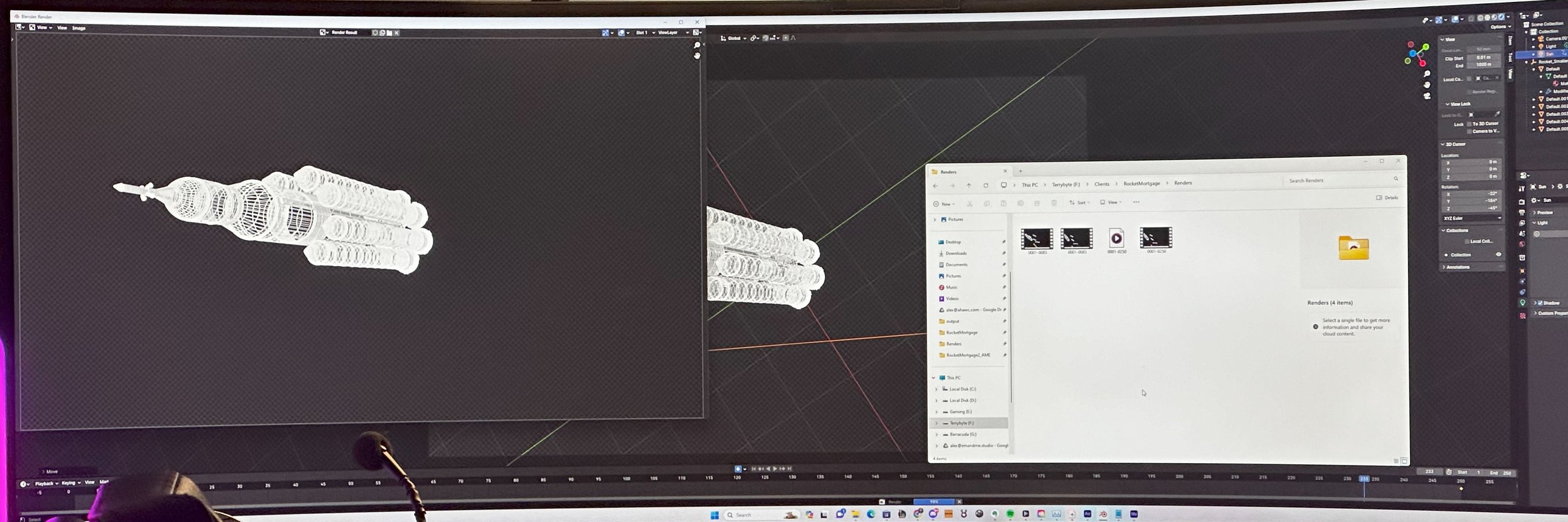
Animated narrative slides designed for the Rocket Mortgage AI townhall
Narrative Architecture for Change
The presentation was structured as a story rather than a briefing. The difference matters. A briefing organizes information. A story creates emotional trajectory -- it tells you where you've been, where you are, and why where you're going is worth the journey. For a major organizational change initiative, that trajectory is the actual content. The data and decisions sit inside it.
The team building this -- Joy Crocker, Jon Bugg, Alexx Kolenda-Mason, Jacqueline Salliotte, Amanda Krogol, Kim Lehman -- understood that the slides were load-bearing for the entire event's argument. The Snoop booking was the attention-getter. The presentation was the substance. Getting that order right was the first creative decision we made.
"When the presentation slides go viral, it means the communication worked at a level that went beyond the room it was designed for."
What Going Viral Means for Internal Work
Viral isn't a goal you set for an internal stakeholder presentation. It's a result that happens when the work has something genuine in it -- a visual idea or a storytelling move that's sharp enough to travel outside its intended context. When colleagues share the slides on their own channels, when the design gets screenshotted and circulated, it means the presentation crossed the line from functional to cultural.
That's the standard worth aiming for even when it's not the stated objective. Not because virality is intrinsically valuable in this context, but because the conditions that produce it -- genuine visual ambition, strong narrative architecture, design that respects the audience's intelligence -- are exactly the conditions that produce presentations people actually remember.
Stakeholder communication is not a lower tier of creative work. An internal townhall has real stakes -- strategic alignment, organizational confidence, the emotional valence people carry out of a room when something big is being asked of them. Treating that work with the same creative ambition as consumer-facing campaigns is the practice. The viral moments are just evidence it worked.
